01
Sourced
A licensed Russian pharmacy buys it for you.
No grey-market middlemen, no warehouses we can't audit. Retail purchase, on demand, against your order.

 tablets
Ambroxol
SKU 105599
Same active ingredient
Other products with Ambroxol
All packagings
Cheapest option
Price
$6.14
Selected · use button above
Price
$6.43
Option 3 of 3
Price
$8.31
Manufacturer leaflet
Facts from the printed manufacturer leaflet. Sections vary by drug — we only show what's actually in the box.
Acute and chronic respiratory diseases with the production of viscous sputum:
• acute and chronic bronchitis;
• pneumonia;
• chronic obstructive pulmonary disease;
• asthma with difficulty in sputum expectoration;
• bronchiectasis.
Острые и хронические заболевания дыхательных путей с выделением вязкой мокроты:
• острый и хронический бронхит;
• пневмония;
• хроническая обструктивная болезнь легких;
• бронхиальная астма с затруднением отхождения мокроты;
• бронхоэктатическая болезнь.
Orally.
Children aged 6 to 12 years: 15 mg (1/2 tablet) 2-3 times a day.
Adults and children over 12 years: 30 mg (1 tablet) 3 times a day.
If necessary, to enhance the therapeutic effect, 60 mg (2 tablets) can be prescribed 2 times a day. The medication should be taken with liquid.
Tablets can be taken regardless of meals.
If symptoms persist for 4-5 days after starting treatment, it is recommended to consult a doctor.
Внутрь.
Детям от 6 до 12 лет: по 15 мг (1/2 таблетки) 2-3 раза в сутки.
Взрослым и детям старше 12 лет: по 30 мг (1 таблетка) 3 раза в сутки.
При необходимости для усиления терапевтического эффекта можно назначать по 60 мг (2 таблетки) 2 раза в сутки. Препарат принимают, запивая жидкостью.
Принимать таблетки можно независимо от приема пищи.
В случае сохранения симптомов заболевания в течении 4-5 дней от начала приема рекомендуется обратиться к врачу.
Composition per tablet:
Active ingredient: ambroxol hydrochloride - 30.0 mg
Excipients: lactose monohydrate (milk sugar), corn starch, microcrystalline cellulose, povidone K17 (low molecular weight medical polyvinylpyrrolidone 12600 ± 2700), magnesium stearate, colloidal silicon dioxide (aerosil).
Round flat-cylindrical tablets of white or almost white color with a bevel and a score line.
Состав на одну таблетку:
Действующее вещество: амброксола гидрохлорид - 30,0 мг
Вспомогательные вещества: лактозы моногидрат (сахар молочный), крахмал кукурузный, целлюлоза микрокристаллическая, повидон К17 (поливинилпирролидон низкомолекулярный медицинский 12600 ± 2700), магния стеарат, кремния диоксид коллоидный (аэросил).
круглые плоскоцилиндрические таблетки белого или почти белого цвета с фаской и риской.
• hypersensitivity to ambroxol and other components of the product;
• hereditary lactose intolerance, lactase deficiency, and glucose-galactose malabsorption;
• first trimester of pregnancy and breastfeeding period;
• children under 6 years of age. Use with caution
• disorder of bronchial motility and increased mucus secretion (e.g., in rare primary ciliary dyskinesia syndrome);
• renal insufficiency and/or severe liver disease;
• peptic ulcer disease of the stomach and duodenum, including history;
• second and third trimesters of pregnancy.
Use during pregnancy and breastfeeding
Ambroxol crosses the placental barrier. Preclinical studies have not revealed any direct or indirect adverse effects on pregnancy, embryonic/fetal, postnatal development, and labor.
Extensive clinical experience with ambroxol after the 28th week of pregnancy has not found evidence of negative effects on the fetus.
However, standard precautions should be observed when using the medication during pregnancy. Ambroxol is particularly not recommended in the first trimester of pregnancy. In the second and third trimesters of pregnancy, the use of the product is possible only if the potential benefit to the mother outweighs the potential risk to the fetus.
Ambroxol may be excreted in breast milk. Although no adverse effects have been observed in breastfed children, the use of ambroxol during lactation is not recommended.
Preclinical studies of ambroxol have not revealed any negative impact on fertility.
Do not combine with cough suppressants that hinder mucus clearance.
One tablet contains 145 mg of lactose. The maximum daily dose (4 tablets) contains 580 mg of lactose.
In patients with severe skin lesions - Stevens-Johnson syndrome or toxic epidermal necrolysis - early symptoms may include fever, body aches, rhinitis, cough, and throat inflammation. In symptomatic treatment, there may be a mistaken prescription of mucolytics such as ambroxol. There are isolated reports of Stevens-Johnson syndrome and toxic epidermal necrolysis occurring concurrently with the administration of the drug; however, a causal relationship with the use of the drug is absent.
If the above syndromes develop, it is recommended to discontinue treatment and seek medical attention immediately.
In cases of renal impairment, ambroxol should only be used on a doctor's recommendation.
Effect on the ability to drive vehicles and operate machinery
The drug does not affect the performance of potentially hazardous activities that require increased attention and quick psychomotor reactions.
• повышенная чувствительность к амброксолу и другим компонентам препарата;
• наследственная непереносимость лактозы, дефицит лактазы и глюкозо-галактозная мальабсорбция;
• I триместр беременности и период грудного вскармливания;
• детский возраст до 6 лет.
С осторожностью
• нарушение моторики бронхов и увеличение секреции слизи (например, при редком синдроме первичной дискинезии ресничек);
• почечная недостаточность и/или тяжелое заболевание печени;
• язвенная болезнь желудка и двенадцатиперстной кишки, в том числе в анамнезе;
• II и III триместры беременности.
Применение при беременности и в период грудного вскармливания
Амброксол проникает через плацентарный барьер. Доклинические исследования не выявили прямого или косвенного неблагоприятного влияния на беременность, эмбриональное/фетальное, постнатальное развитие и на родовую деятельность.
Обширный клинический опыт применения амброксола после 28-ой недели беременности не обнаружил свидетельств отрицательного влияния препарата на плод.
Тем не менее необходимо соблюдать обычные меры предосторожности при использовании лекарства во время беременности. Особенно не рекомендуется принимать амброксол в I триместре беременности. Во II и III триместрах беременности применение препарата возможно только в том случае, если потенциальная польза для матери превышает потенциальный риск для плода.
Амброксол может экскретироваться с грудным молоком. Несмотря на то, что нежелательные эффекты у детей, получающих кормление грудью, не наблюдались, в период лактации не рекомендуется использовать амброксол.
Доклинические исследования амброксола не выявили отрицательного воздействия на фертильность.
Не следует комбинировать с противокашлевыми средствами, затрудняющими выведение мокроты.
Одна таблетка содержит 145 мг лактозы. В максимальной суточной дозе (4 таблетки) содержится 580 мг лактозы.
У пациентов с тяжелыми поражениями кожи - синдромом Стивенса-Джонсона или токсическим эпидермальным некролизом - в ранней фазе могут появляться температура, боль в теле, ринит, кашель и воспаление горла. При симптоматическом лечении возможно ошибочное назначение муколитических средств, таких как амброксол. Имеются единичные сообщения о выявлении синдрома Стивенса-Джонсона и токсического эпидермального некролиза, совпавшие по времени с назначением препарата; однако причинно-следственная связь с приемом препарата отсутствует.
При развитии вышеперечисленных синдромов рекомендуется прекратить лечение и немедленно обратиться за медицинской помощью.
При нарушении функции почек амброксол необходимо применять только по рекомендации врача.
Влияние на способность управлять транспортными средствами, механизмами
Препарат не оказывает влияния на выполнение потенциально опасных видов деятельности, требующих повышенного внимания и быстроты психомоторных реакций.
Possible side effects are listed below in descending order of frequency: very common (≥ 1/10); common (≥ 1/100, < 1/10); uncommon (≥ 1/1000, < 1/100); rare (≥ 1/10000, < 1/1000); very rare (< 1/10000); frequency unknown (based on available data, the frequency cannot be established).Gastrointestinal disorders: common - nausea; uncommon - vomiting, diarrhea, dyspepsia, abdominal pain.Immune system disorders: rare - hypersensitivity reactions; frequency unknown - anaphylactic reactions up to the development of shock, angioedema, skin itching.Skin and subcutaneous tissue disorders: rare - skin rash, urticaria; frequency unknown - severe skin adverse reactions, including erythema multiforme, Stevens-Johnson syndrome, toxic epidermal necrolysis (Lyell's syndrome), acute generalized exanthematous pustulosis.If any of the side effects listed in the instructions worsen or you notice any other side effects not mentioned in the instructions, inform your doctor.Symptoms: Specific symptoms of ambroxol overdose have not been described. The observed symptoms of overdose corresponded to the known side effects of ambroxol used at recommended doses (nausea, vomiting, abdominal pain, diarrhea, dyspepsia). Treatment: Induced vomiting, gastric lavage within the first 1-2 hours after taking the drug, consumption of fatty foods; symptomatic therapy. Due to the high degree of binding of ambroxol to plasma proteins (80-90%), effective elimination of ambroxol through forced diuresis and hemodialysis is unlikely.The simultaneous use of ambroxol and antitussive medications (e.g., codeine) is not recommended, as the suppression of the cough reflex may lead to the risk of mucus accumulation in the airways, making its expulsion difficult. Ambroxol increases the penetration of amoxicillin, cefuroxime, erythromycin, and doxycycline into the bronchial lumen.
Возможные побочные эффекты приведены ниже по нисходящей частоте возникновения случая: очень часто (? 1/10), часто (? 1/100, ?1/10), нечасто (? 1/1000, ?1/100), редко (?1/10000,
Симптомы: специфических симптомов передозировки амброксола не описано. Наблюдаемые симптомы передозировки соответствовали известным побочным эффектам амброксола, применяемого в рекомендованных дозах (тошнота, рвота, боль в животе, диарея, диспепсия).
Лечение: искусственная рвота, промывание желудка в первые 1-2 ч после приема препарата, прием жиросодержащих продуктов; симптоматическая терапия.
Из-за высокой степени связывания амброксола с белками плазмы крови (80-90 %), эффективное выведение амброксола путем форсированного диуреза и гемодиализа маловероятно.
Не рекомендуется одновременное применение амброксола и противокашлевых препаратов (например, кодеина), т.к. за счет подавления кашлевого рефлекса может возникнуть опасность скопления мокроты в просвете дыхательных путей с затруднением ее выведения.
Амброксол увеличивает проникновение в бронхиальный просвет амоксициллина, цефуроксима, эритромицина и доксициклина.
Studies have shown that ambroxol increases secretion in the respiratory tract. It enhances the production of pulmonary surfactant and stimulates ciliary activity. These effects lead to an increase in the flow and transport of mucus (mucociliary clearance). Enhanced mucociliary clearance improves sputum expectoration and eases coughing.
In patients with chronic obstructive pulmonary disease, long-term therapy with ambroxol (for at least 2 months) resulted in a significant reduction in the number of exacerbations. A statistically significant decrease in the duration of exacerbations and the number of days of antibiotic therapy was observed.
All immediate-release forms of ambroxol are characterized by rapid and nearly complete absorption with a linear dose-dependent relationship within the therapeutic concentration range. The maximum plasma concentration (Cmax) after oral administration is reached within 1-2.5 hours. The absolute bioavailability of ambroxol is 79%. The volume of distribution is 552 L. In the therapeutic concentration range, plasma protein binding is approximately 90%.
The transfer of ambroxol from blood to tissues during oral administration occurs rapidly. The highest concentrations of the active substance are observed in the lungs.
Approximately 30% of the orally administered dose undergoes first-pass metabolism in the liver. Studies on human liver microsomes have shown that the CYP3A4 isoenzyme is the predominant isoform responsible for the metabolism of ambroxol to dibromantranilic acid. The remaining portion of ambroxol is metabolized in the liver, primarily through glucuronidation and partial cleavage to dibromantranilic acid (approximately 10% of the administered dose), as well as a small amount of additional metabolites. The terminal half-life of ambroxol is about 10 hours. The total clearance is within the range of 660 mL/min, with renal clearance accounting for approximately 8% of total clearance. Using radioactive labeling, it has been estimated that after a single dose of the drug, about 83% of the administered dose is excreted in urine over the following 5 days.
No clinically significant influence of age and sex on the pharmacokinetics of ambroxol has been found, therefore there is no basis for dose adjustment based on these factors.
В исследованиях показано, что амброксол увеличивает секрецию в дыхательных путях. Он усиливает продукцию легочного сурфактанта и стимулирует цилиарную активность. Эти эффекты приводят к усилению тока и транспорта слизи (мукоцилиарного клиренса). Усиление мукоцилиарного клиренса улучшает отхождение мокроты и облегчает кашель.
У пациентов с хронической обструктивной болезнью легких длительная терапия амброксолом (на протяжении не менее 2 месяцев) приводила к значительному снижению числа обострений. Отмечалось достоверное уменьшение длительности обострений и числа дней антибиотикотерапии.
Для всех лекарственных форм амброксола немедленного высвобождения характерна быстрая и почти полная абсорбция с линейной зависимостью от дозы в терапевтическом интервале концентраций. Максимальная концентрация в плазме (Сmax) при пероральном приеме достигается через 1-2,5 ч. Абсолютная биодоступность амброксола составляет 79 %. Объем распределения составляет 552 л. В терапевтическом интервале концентраций связывание с белками плазмы составляет примерно 90 %.
Переход амброксола из крови в ткани при пероральном применении происходит быстро. Самые высокие концентрации действующего вещества препарата наблюдаются в легких.
Примерно 30 % принятой пероральной дозы подвергается эффекту первичного прохождения через печень. Исследования на микросомах печени человека показали, что изофермент CYP3A4 является преобладающей изоформой, ответственной за метаболизм амброксола до дибромантраниловой кислоты. Оставшаяся часть амброксола метаболизируется в печени, главным образом путем глюкуронидации и путем частичного расщепления до дибромантраниловой кислоты (приблизительно 10 % от введенной дозы), а также небольшого количества дополнительных метаболитов. Период терминального полувыведения амброксола составляет около 10 часов. Общий клиренс находится в пределах 660 мл/мин, на почечный клиренс приходится примерно 8 % от общего клиренса. Методом радиоактивной метки было подсчитано, что после приема единоразовой дозы препарата в течение последующих 5 дней с мочой выделяется около 83 % принятой дозы.
Не обнаружено клинически значимого влияния возраста и пола на фармакокинетику амброксола, поэтому нет оснований для подбора дозировки по этим признакам.
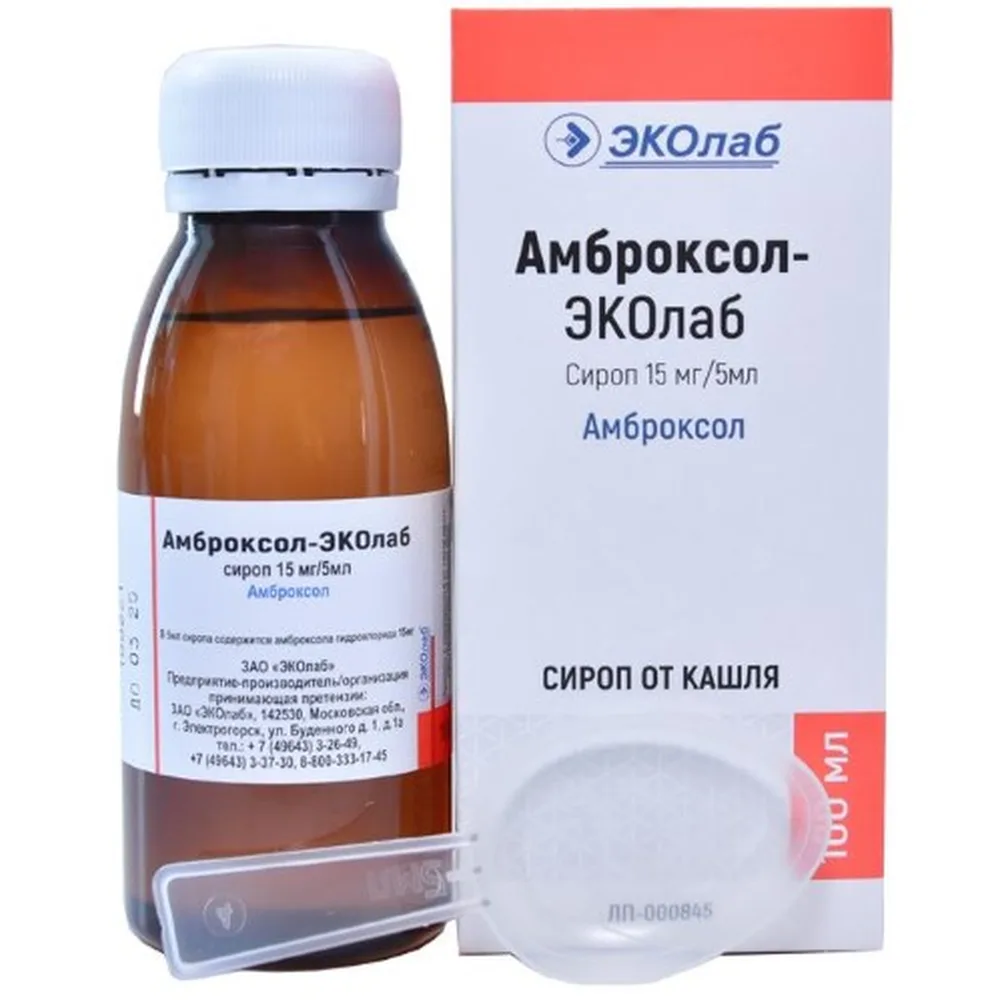
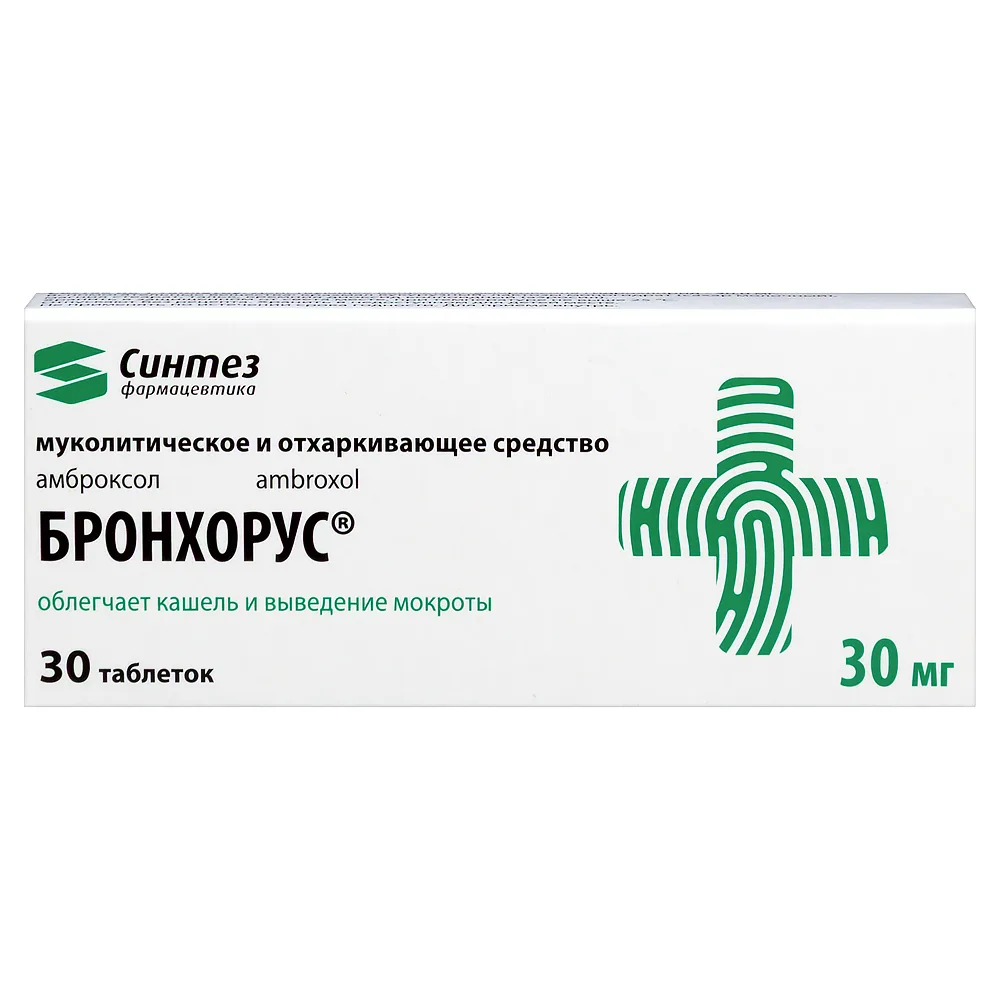
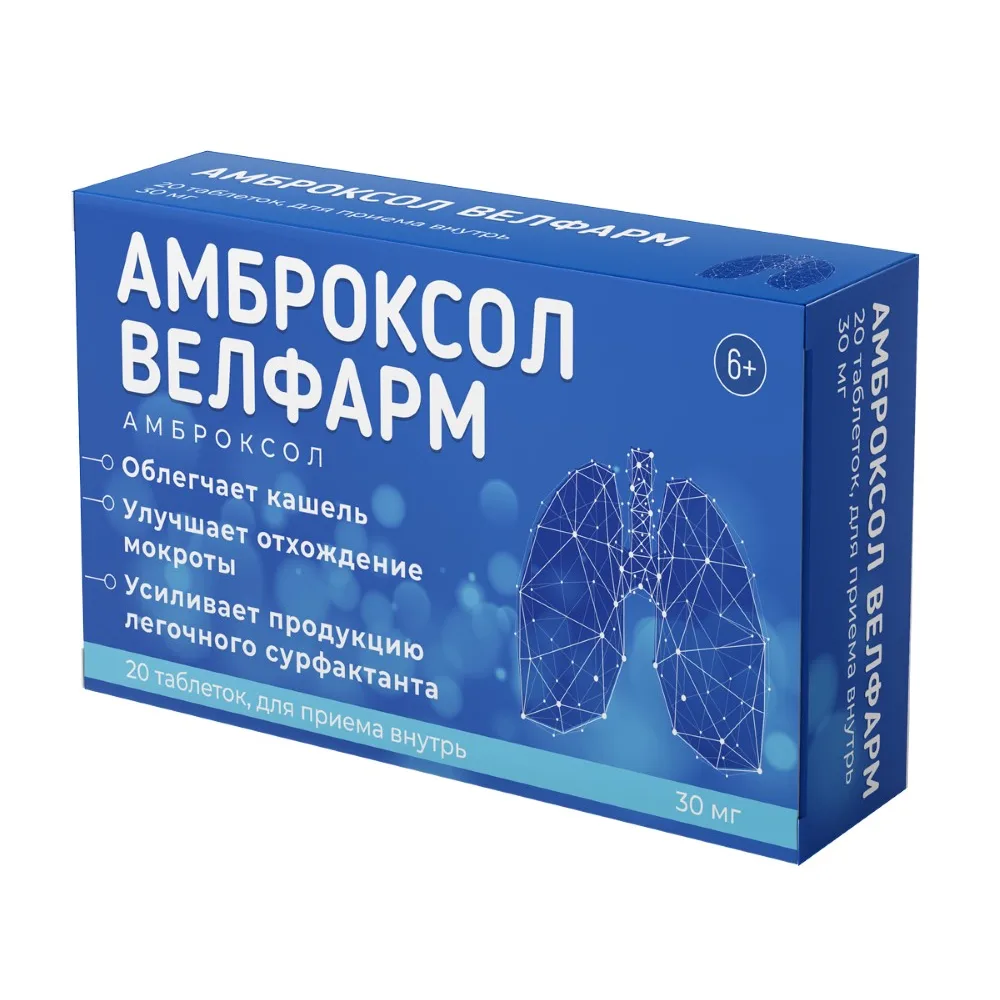
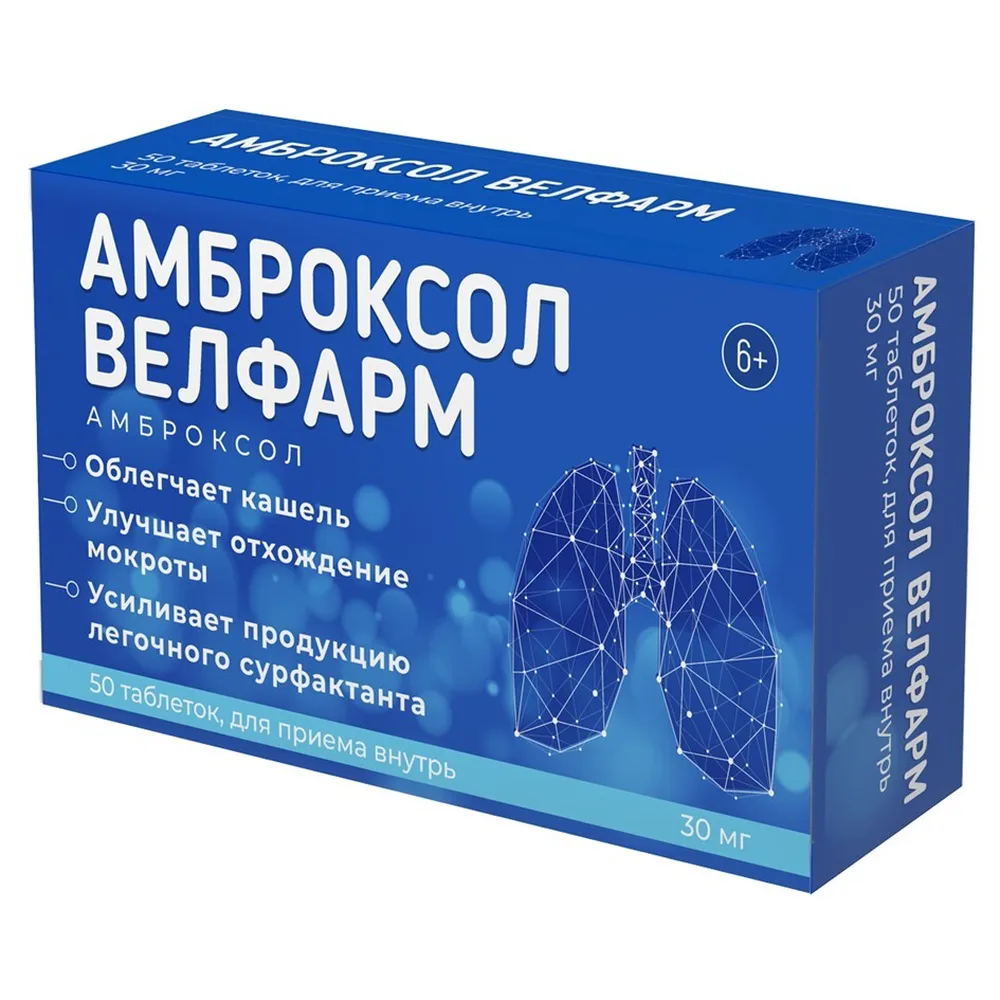
RU name Амброксол Велфарм 30 мг 30 шт. блистер таблетки
How we fulfill
Three checkpoints between the pharmacy shelf and your door. You see every one.
01
No grey-market middlemen, no warehouses we can't audit. Retail purchase, on demand, against your order.
02
A photo of your actual parcel in its original retail packaging lands in your inbox before it ships. Like this →
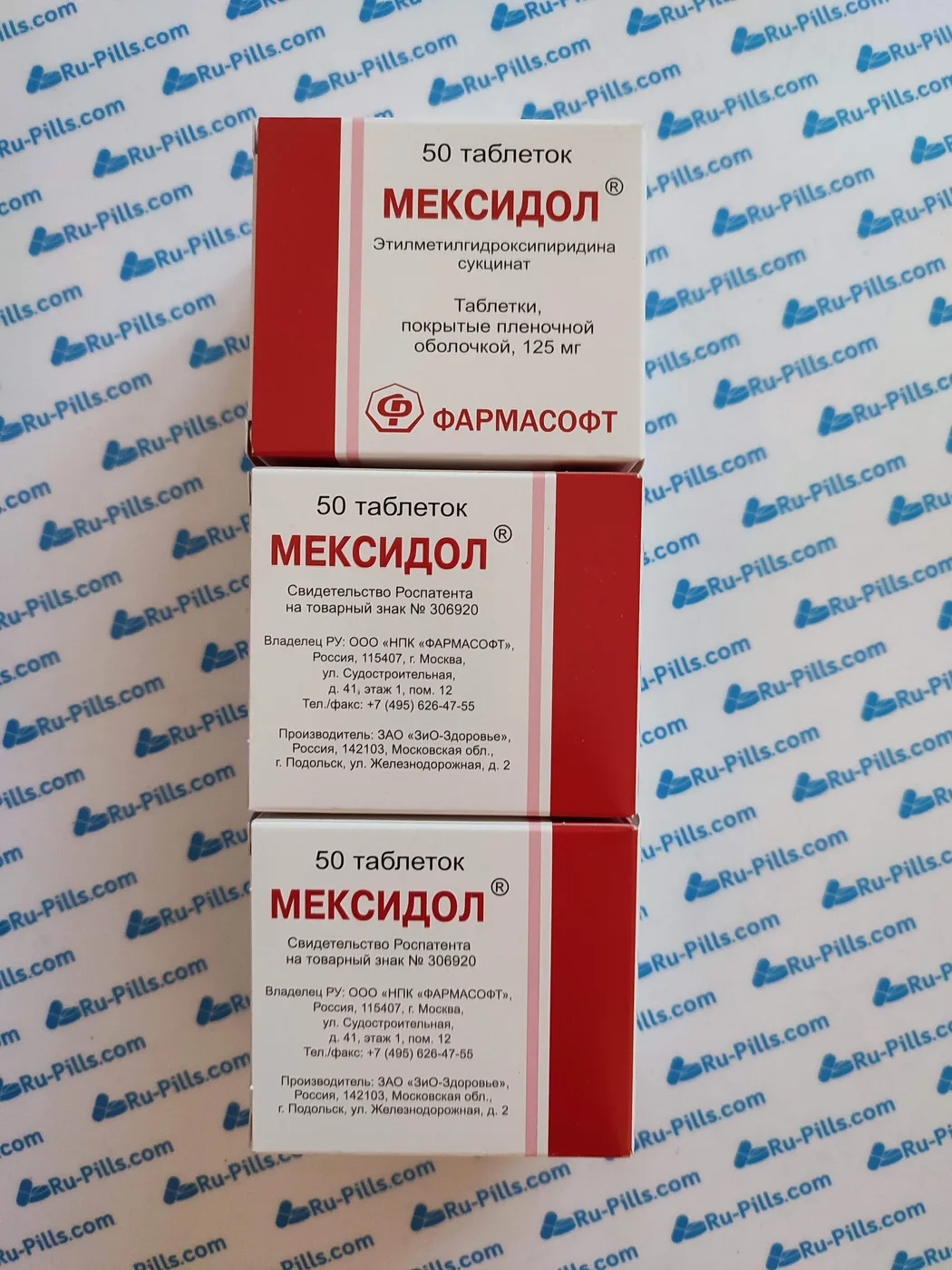 Real customer parcel
03
To 120+ countries. Most parcels arrive in 7–18 days.
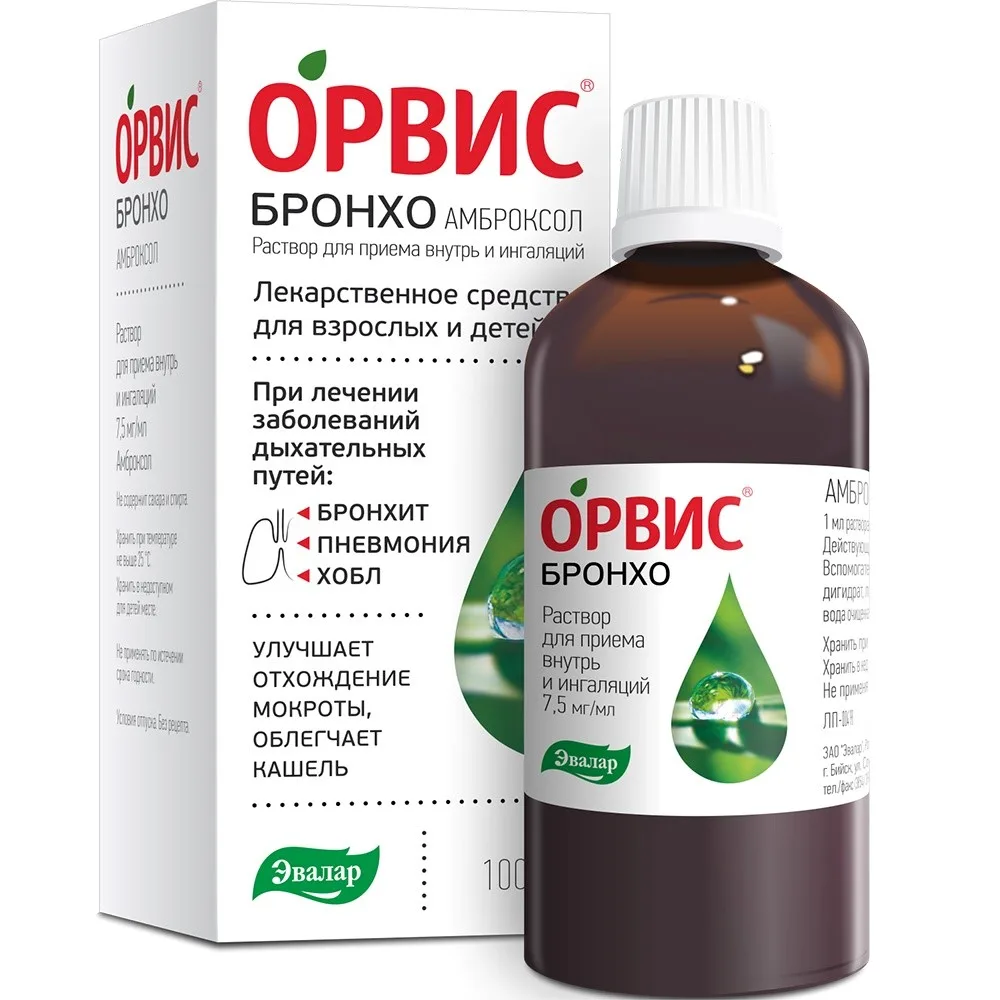
Ambroxol · oral solution
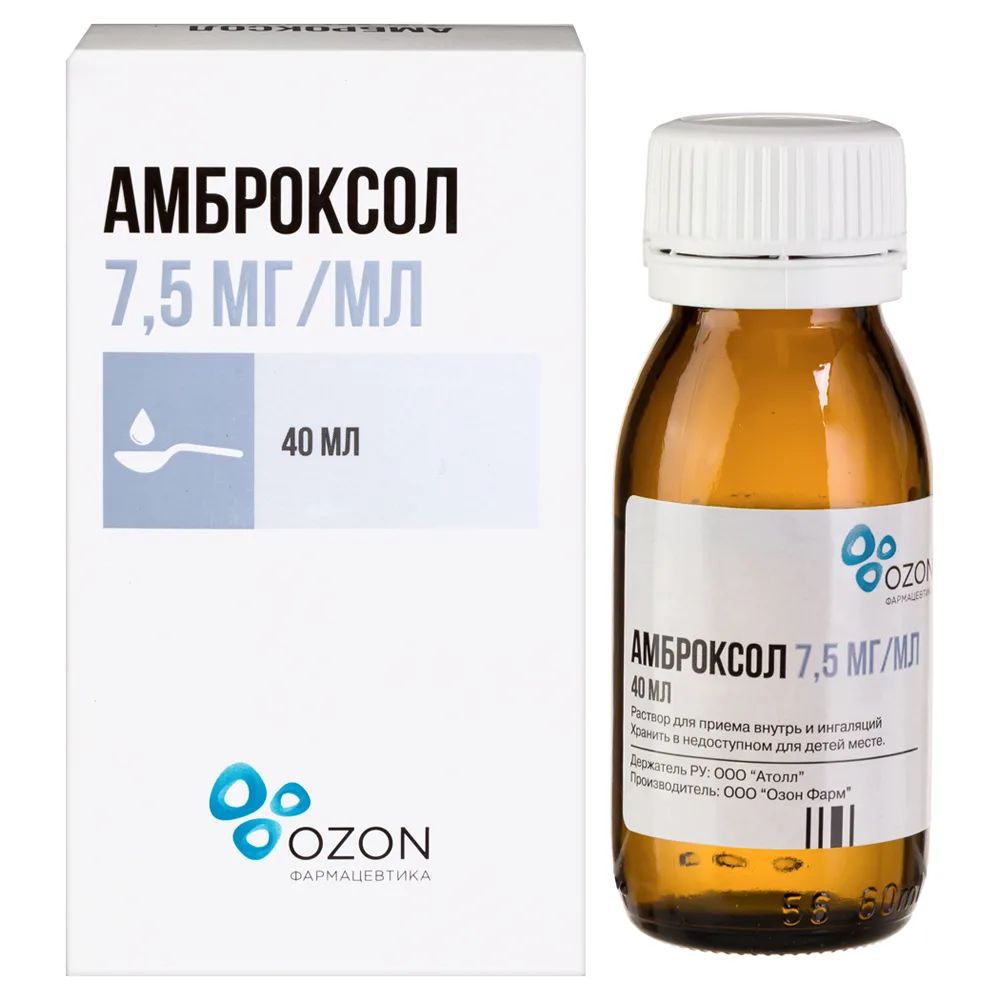
Ambroxol · oral solution