01
Sourced
A licensed Russian pharmacy buys it for you.
No grey-market middlemen, no warehouses we can't audit. Retail purchase, on demand, against your order.

 powder for preparing solution for intravenous and intramuscular administration
Cefepime
1 g · powder for preparing solution for intravenous and intramuscular administration
SKU 104731
Same active ingredient
Other products with Cefepime
Manufacturer leaflet
Facts from the printed manufacturer leaflet. Sections vary by drug — we only show what's actually in the box.
Infectious-inflammatory diseases in adults caused by microorganisms sensitive to cefepime:
- lower respiratory tract infections, including pneumonia and bronchitis;
- urinary tract infections, both complicated, including pyelonephritis, and uncomplicated;
- skin and soft tissue infections;
- intra-abdominal infections, including peritonitis and biliary tract infections;
- gynecological infections;
- septicemia;
- febrile neutropenia;
- prevention of potential infections during invasive surgical procedures.
Infectious-inflammatory diseases in children caused by microorganisms sensitive to cefepime:
- pneumonia;
- urinary tract infections, both complicated, including pyelonephritis, and uncomplicated;
- skin and soft tissue infections;
- septicemia;
- febrile neutropenia;
- bacterial meningitis.
Инфекционно-воспалительные заболевания у взрослых, вызванные чувствительными к цефепиму микроорганизмами:
инфекции нижних дыхательных путей, включая пневмонию и бронхит;
инфекции мочевыводящих путей, как осложненные, включая пиелонефрит, так и неосложненные;
инфекции кожи и мягких тканей;
инфекции брюшной полости, включая перитонит и инфекции желчных путей;
гинекологические инфекции;
септицемия;
фебрильная нейтропения;
профилактика возможных инфекций при проведении полостных хирургических операций.
Инфекционно-воспалительные заболевания у детей, вызванные чувствительными к цефепиму микроорганизмами:
пневмония;
инфекции мочевыводящих путей, как осложненные, включая пиелонефрит, так и неосложненные;
инфекции кожи и мягких тканей;
септицемия;
фебрильная нейтропения;
бактериальный менингит.
The drug is administered intravenously (IV) or intramuscularly (IM). The doses and route of administration depend on the sensitivity of the pathogens, the severity of the infection, the state of kidney function, and the overall condition of the patient.
Intravenous administration is recommended for patients with severe or life-threatening infections, especially when there is a risk of septic shock.
Dosage regimens of cefepime depending on the disease, body weight, and age of the patient:
The dose for children should not exceed the maximum recommended dose for adults (2 g IV every 8 hours). Experience with intramuscular administration of the drug in children is limited.
Adults and children weighing more than 40 kg with normal kidney function:
Urinary tract infections, mild to moderate severity: 500 mg - 1 g IV or IM every 12 hours
Other infections, mild to moderate severity: 1 g IV or IM every 12 hours
Severe infections: 2 g IV every 12 hours
Very severe and life-threatening infections: 2 g IV every 8 hours
The usual duration of treatment is 7-10 days; in severe infections, longer treatment may be required.
In the case of treating febrile neutropenia, the usual duration of treatment is 7 days or until neutropenia resolves.
Prevention of infections during surgical procedures:
60 minutes before the start of the surgical procedure, 2 g of the drug is administered IV as an infusion over 30 minutes. Immediately after the infusion, 500 mg of metronidazole is administered intravenously. The metronidazole solution is prepared according to its usage instructions. Due to pharmaceutical incompatibility, metronidazole and cefepime should not be mixed in the same container. The infusion system should be flushed before administering metronidazole.
During prolonged (over 12 hours) surgical procedures, re-administration of cefepime at the same dose is recommended 12 hours after the first dose, followed by the administration of metronidazole.
Children from 2 months to 40 kg body weight:
For urinary tract infections, skin and soft tissue infections, pneumonia, the recommended dose is 50 mg/kg every 12 hours for 10 days. In the case of severe infections - every 8 hours.
Patients with febrile neutropenia, septicemia, bacterial meningitis should receive 50 mg/kg every 8 hours for 7-10 days.
Patients with impaired kidney function:
Patients with impaired kidney function require dosage adjustment of cefepime to compensate for the reduced rate of drug elimination via urine. The dosing regimen depends on the degree of kidney function impairment, the severity of the infection, and the sensitivity of microorganisms. In cases of mild or moderate kidney function impairment, the initial dose of the drug is the same as for normal kidney function.
Recommended maintenance doses of cefepime based on creatinine clearance are presented in the table below.
Creatinine clearance for men is calculated based on serum creatinine concentration using the following formula:
Creatinine clearance (ml/min) = (body weight (kg) × (140 - age)) / (72 × serum creatinine (mg/dl))
Creatinine clearance for women is calculated using the same formula, applying a factor of 0.85.
Creatinine clearance (ml/min) Recommended maintenance doses
>60 (Regular dose, no dose adjustment required)
500 mg every 12 hours
1 g every 12 hours
2 g every 12 hours
2 g every 8 hours
30-60
500 mg every 24 hours
1 g every 24 hours
2 g every 24 hours
2 g every 12 hours
11-29
500 mg every 24 hours
500 mg every 24 hours
1 g every 24 hours
2 g every 24 hours
Препарат применяется внутривенно (в/в), внутримышечно (в/м). Дозы и путь введения зависят от чувствительности возбудителей, тяжести инфекции, состояния функции почек и общего состояния пациента.
Внутривенное введение рекомендуется для пациентов с тяжелыми или угрожающими жизни инфекциями, особенно при угрозе возникновения септического шока.
Режимы дозирования цефепима в зависимости от заболевания, массы тела и возраста пациента
Доза для детей не должна превышать максимальную рекомендуемую дозу для взрослых (2 г в/в, каждые 8 часов). Опыт внутримышечного введения препарата детям ограничен.
Взрослые и дети с массой тела более 40 кг при нормальной функции почек
Инфекции мочевых путей, легкой и средней тяжести: 500 мг - 1 г
в/в или в/м каждые
12 часов
Другие инфекции, легкой и средней тяжести: 1 г
в/в или в/м каждые
12 часов
Тяжелые инфекции: 2 г в/в каждые
12 часов
Очень тяжелые и угрожающие жизни инфекции: 2 г в/в каждые
8 часов
Обычная продолжительность лечения составляет 7-10 дней; при тяжелых инфекциях может потребоваться более продолжительное лечение.
В случае лечения фебрильной нейтропении обычная продолжительность лечения составляет 7 дней или до исчезновения нейтропении.
Профилактика инфекций при проведении хирургических операций
За 60 минут до начала хирургической операции вводят 2 г препарата в/в в виде инфузии в течение 30 минут. Сразу после окончания инфузии пациенту вводят 500 мг метронидазола внутривенно. Раствор метронидазола готовят в соответствии с инструкцией по его применению. Вследствие фармацевтической несовместимости метронидазола и цефепима их не следует смешивать в одном сосуде. Инфузионную систему перед введением метронидазола следует промыть.
Во время длительных (более 12 ч) хирургических операций через 12 ч после первой дозы рекомендуется повторное введение цефепима в той же дозе с последующим введением метронидазола.
Дети от 2 месяцев с массой тела до 40 кг
При инфекциях мочевых путей, инфекциях кожи и мягких тканей, пневмонии рекомендуемая доза составляет 50 мг/кг каждые 12 часов в течение 10 дней. В случае тяжелых инфекций - каждые 8 часов.
Пациентам с фебрильной нейтропенией, септицемией, бактериальным менингитом следует вводить 50 мг/кг каждые 8 часов в течение 7-10 дней.
Пациенты с нарушением функции почек
Больным с нарушением функции почек требуется корректировка дозировки цефепима с целью компенсации уменьшенной скорости выведения препарата с мочой. Режим дозирования зависит от степени нарушения функции почек, тяжести инфекции и чувствительности микроорганизмов. При слабых или умеренных нарушениях функции почек начальная доза препарата такая же, как при нормальной функции почек.
Рекомендуемые поддерживающие дозы цефепима в зависимости от клиренса креатинина представлены в таблице ниже.
Клиренс креатинина для мужчин рассчитывают, исходя из концентрации сывороточного креатинина по следующей формуле:
Клиренс креатинина (мл/мин)=(масса тела (кг)×(140-возраст))/(72×сывороточный креатинин(мг/дл))
Клиренс креатинина для женщин рассчитывают по той же формуле, используя фактор 0,85.
Клиренс креатинина (мл/мин) Рекомендуемые поддерживающие дозы
>60 (Обычная доза, корректировка дозы не требуется)
ровки дозы не т]
эебуется)
500 мг
каждые 12 ч 1 г
каждые 12 ч 2г
каждые 12 ч 2 г каждые
8 ч
30-60 500 мг
каждые 24 ч 1 г
каждые 24 ч 2 г
каждые 24 ч 2 г
каждые 12 ч
11-29 500 мг
каждые 24 ч 500 мг
каждые 24 ч 1 г
каждые 24 ч 2 г
каждые 24 ч
Composition:
per bottle
Active ingredient: cefepime hydrochloride monohydrate – 1.19 g, calculated as cefepime – 1.00 g;
Excipients: L-arginine – 0.73 g
Note: The mass of the contents of the bottle depends on the activity of cefepime.
powder that is white or white with a yellowish tint
Состав:
на один флакон
Действующее вещество: цефепима гидрохлорида моногидрат – 1,19 г, в пересчете на цефепим – 1,00 г, вспомогательное вещество: L-аргинин – 0,73 г
Примечание: Масса содержимого флакона зависит от активности цефепима
порошок белого или белого с желтоватым оттенком цвета
• hypersensitivity to cefepime, cephalosporins, penicillins, and other beta-lactam antibiotics, arginine, or other components of the product;
• age under 2 months.
With caution
History of gastrointestinal diseases (especially colitis), renal insufficiency (creatinine clearance less than 60 ml/min).
Hypersensitivity
Before starting treatment, it is necessary to establish the patient's history of allergic reactions to cefepime, other cephalosporin antibiotics, penicillins, and other beta-lactam antibiotics, as well as other forms of allergy. Severe hypersensitivity reactions have been reported with all types of beta-lactam antibiotics, sometimes with fatal outcomes.
If an allergic reaction occurs, treatment with the drug should be discontinued, and appropriate measures should be taken. In the case of a severe allergic reaction (e.g., anaphylactic reaction) occurring during the administration of the drug, the use of epinephrine and other supportive therapy may be required.
Neurotoxicity
During post-marketing surveillance, the following serious adverse reactions have been reported, including life-threatening or fatal outcomes: encephalopathy (altered consciousness, including confusion, hallucinations, stupor, and coma), myoclonus, seizures, and non-convulsive status epilepticus. Most cases were observed in patients with renal insufficiency who did not receive dose adjustment. However, in some cases, neurotoxicity was noted in patients who had their doses adjusted according to the degree of renal insufficiency. In most cases, symptoms of neurotoxicity were reversible and resolved after discontinuation of the drug and/or after hemodialysis. If neurotoxicity is associated with the use of cefepime, consideration should be given to discontinuing cefepime therapy or adjusting the dose in patients with renal insufficiency.
In the presence of factors that may cause impaired kidney function, dose adjustment of cefepime is required to compensate for the reduced rate of drug elimination via urine. The dosing regimen depends on the degree of renal insufficiency, the severity of the infection, and the sensitivity of the microorganisms. In cases of mild to moderate renal impairment, the initial dose of the drug is the same as in normal kidney function. The risk of developing toxic reactions is particularly increased in elderly patients with impaired kidney function.
Clostridium difficile-associated diarrhea
The use of almost all broad-spectrum antibiotics may lead to diarrhea associated with Clostridium difficile (CDAD), which can range from mild to severe, potentially resulting in fatal outcomes.
If diarrhea occurs during treatment with the drug, the diagnosis of CDAD should be confirmed. Patients should be closely monitored for the development of CDAD, as cases have been reported to occur more than two months after the cessation of antibiotic use. If CDAD is suspected or confirmed, antibiotics should be discontinued, except for those prescribed to suppress Clostridium difficile. Medications that inhibit intestinal peristalsis should not be used.
When prescribing empirical treatment, data on acquired resistance of the causative microorganisms should be taken into account. Microbial resistance may change over time and by geographical location. Appropriate tests should be conducted to identify the causative microorganism and determine its sensitivity to cefepime. Cefepime can be used as monotherapy even before the identification of the causative microorganism, as it has a broad spectrum of antibacterial activity against both gram-positive and gram-negative microorganisms. In cases of mixed aerobic/anaerobic infection risk (especially when cefepime-resistant microorganisms may be present), treatment with cefepime in combination with a drug effective against anaerobes can be initiated before the identification of the pathogen.
After identifying the pathogen and determining antibiotic sensitivity, treatment should be conducted according to the test results.
As with the use of other antibiotics, treatment with cefepime may lead to colonization by resistant microflora. If superinfections develop during treatment, appropriate measures should be taken.
In studies on rats, no effects on fertility were noted. Data on the effects on human fertility are lacking.
Cephalosporin antibiotics may cause false-positive reactions for glucose in urine in tests based on the reduction of copper ions (with Benedict's or Fehling's solutions or with Clinistix tablets), but not in enzyme tests (with glucose oxidase). Therefore, enzyme tests with glucose oxidase are recommended for determining glucose in urine.
• повышенная чувствительность к цефепиму, цефалоспориновым, пенициллиновым и другим бета-лактамным антибиотикам, аргинину или к другим компонентам препарата;
• детский возраст до 2 месяцев.
С осторожностью
Заболевания желудочно-кишечного тракта в анамнезе (особенно колит), почечная недостаточность (клиренс креатинина менее 60 мл/мин).
Гиперчувствительность
Перед началом лечения следует установить наличие в анамнезе у больного аллергических реакций на цефепим, другие цефалоспориновые антибиотики, пенициллины и другие бета- лактамные антибиотики, а также других форм аллергии. При применении всех видов бета- лактамных антибиотиков отмечались случаи развития тяжелых реакций гиперчувствительности, иногда с летальным исходом.
При развитии аллергической реакции следует прекратить лечение препаратом и предпринять соответствующие меры. При развитии тяжелой аллергической реакции (например, анафилактической реакции) непосредственно во время введения препарата может потребоваться применение эпинефрина и другой поддерживающей терапии. Нейротоксичность
Во время пострегистрационного наблюдения были зарегистрированы следующие серьезные нежелательные реакции, в том числе угрожающие жизни или приводящие к летальному исходу: энцефалопатия (нарушение сознания, включая спутанность сознания, галлюцинации, ступор и кома), миоклонус, судороги и бессудорожный эпилептический статус. Большинство случаев отмечались у пациентов с почечной недостаточностью, которым не проводилась коррекция дозы. Тем не менее, в некоторых случаях нейротоксичность отмечалась у пациентов, которым проводилась коррекция дозы в зависимости от степени почечной недостаточности. В большинстве случаев симптомы нейротоксичности были обратимы и исчезали после отмены препарата и/или после проведения гемодиализа. Если нейротоксичность связана с применением цефепима, следует рассмотреть вопрос о прекращении терапии цефепимом или корректировать дозу у пациентов с почечной недостаточностью.
При наличии факторов, могущих вызвать нарушение функции почек, требуется коррекция дозы цефепима с целью компенсации уменьшенной скорости выведения препарата с мочой. Режим дозирования зависит от степени почечной недостаточности, тяжести инфекции и чувствительности микроорганизмов. При легких или средней степени тяжести нарушениях функции почек начальная доза препарата такая же, как при нормальной функции почек. Риск развития токсических реакций особенно увеличивается у пожилых пациентов с нарушенной функцией почек.
Clostridium difficile-ассоциированная диарея
При применении практически всех антибиотиков широкого спектра действия возможно возникновение диареи, ассоциированной с Clostridium difficile (CDAD - Clostridium difficile- associated diarrhea), которая может протекать как в легкой форме, так и в тяжелой, вплоть до летального исхода.
При возникновении диареи во время лечения препаратом необходимо подтвердить диагноз CDAD. Следует тщательно наблюдать за больным на предмет развития CDAD, поскольку регистрировались случаи ее возникновения спустя более двух месяцев после прекращения применения антибиотиков. При подозрении или подтверждении CDAD необходимо прекратить применение антибиотиков, кроме тех, которые назначены для подавления Clostridium difficile. Нельзя применять лекарственные средства, тормозящие перистальтику кишечника.
При назначении эмпирического лечения необходимо принимать во внимание данные о приобретенной устойчивости микроорганизмов-возбудителей. Устойчивость микроорганизмов может изменяться с течением времени и географического положения. Для идентификации микроорганизма-возбудителя и определения чувствительности к цефепиму следует провести соответствующие тесты. Цефепим может применяться в виде монотерапии даже до идентификации микроорганизма-возбудителя, так как он обладает широким спектром антибактериального действия в отношении грамположительных и грамотрицательных микроорганизмов. При риске смешанной аэробно/анаэробной инфекции (особенно, когда могут присутствовать нечувствительные к цефепиму микроорганизмы) лечение препаратом цефепим в комбинации с препаратом, действующим на анаэробы, можно начинать до идентификации возбудителя.
После идентификации возбудителя и определения чувствительности к антибиотикам лечение следует проводить в соответствии с результатами тестов.
Как и при применении других антибиотиков, лечение препаратом цефепим может приводить к колонизации нечувствительной микрофлоры. При развитии суперинфекций во время лечения необходимо принятие соответствующих мер.
В исследованиях на крысах не было отмечено влияния на фертильность. Данные о влиянии на фертильность у людей отсутствуют.
Антибиотики группы цефалоспоринов могут быть причиной ложноположительной реакции на глюкозу в моче в тестах, основанных на восстановлении ионов меди (с растворами Бенедикта или Фелинга или с таблетками Клинитест), но не в ферментных тестах (с глюкозоксидазой). В связи с этим для определения глюкозы в моче рекомендуется применять ферментные тесты с глюкозоксидазой.
The most commonly reported side effects are related to the gastrointestinal tract and allergic reactions. Below are the side effects categorized by organ and system according to their frequency: very common (≥1/10); common (≥1/100, but
Symptoms: encephalopathy (confusion, hallucinations, stupor, coma), myoclonic seizures, increased neuromuscular excitability.
Treatment
In cases of significant overdose, especially in patients with impaired kidney function, hemodialysis is indicated.
Drug Interactions
When cefepime is used concurrently with aminoglycosides, there is an increased risk of ototoxic and nephrotoxic effects. Therefore, monitoring of kidney function and hearing is necessary when using this combination.
When other cephalosporins are used concurrently with strong diuretics, such as furosemide, there have been reports of an increased risk of nephrotoxic effects from cephalosporins. Monitoring of kidney function is required when cefepime is used with strong diuretics.
The solution of the drug is pharmaceutically incompatible with solutions of metronidazole, vancomycin, gentamicin, tobramycin sulfate, and netilmicin sulfate, and therefore they should not be mixed. However, when cefepime and the mentioned antibiotics are prescribed together, each can be administered separately.
Data on the compatibility of cefepime solutions with other medicinal products are provided in the table below.
Cefepime concentration | Name/concentration of the other drug in the mixture | Infusion solution
40 mg/ml | Amikacin 6 mg/ml | 0.9% sodium chloride or 5% dextrose
40 mg/ml | Ampicillin 1 mg/ml | 5% dextrose
40 mg/ml | Ampicillin 10 mg/ml | 5% dextrose
40 mg/ml | Ampicillin 1 mg/ml | 0.9% sodium chloride
40 mg/ml | Ampicillin 10 mg/ml | 0.9% sodium chloride
4 mg/ml | Ampicillin 40 mg/ml | 0.9% sodium chloride
4-40 mg/ml | Clindamycin | 0.9% sodium chloride or 5% dextrose
4 mg/ml | Heparin 10-50 IU/ml | 0.9% sodium chloride or 5% dextrose
4 mg/ml | Potassium chloride | 10-40 mEq/L | 0.9% sodium chloride or 5% dextrose
4 mg/ml | Theophylline 0.8 mg/ml | 5% dextrose
Concurrent use with bacteriostatic antibiotics may reduce the effectiveness of beta-lactam antibiotics.
Наиболее часто отмечаются побочные эффекты со стороны желудочно-кишечного тракта и аллергические реакции. Ниже перечислены побочные эффекты по органам и системам в соответствии с их частотой: очень часто (≥1/10); часто (≥1/100, но
Симптомы: энцефалопатия, (спутанность сознания, галлюцинации, ступор, кома), миоклонические судороги, повышенная нервно-мышечная возбудимость.
Лечение
В случаях значительного превышения рекомендованных доз, особенно у больных с нарушенной функцией почек, показан гемодиализ.
Взаимодействие с другими лекарственными средствами
При одновременном применении цефепима с аминогликозидами повышен риск развития ототоксического и нефротоксического действия. Поэтому при применении этой комбинации необходимо наблюдение за функцией почек и органа слуха.
При одновременном применении других цефалоспоринов с сильными диуретиками, такими как фуросемид сообщалось об увеличении риска развития нефротоксического действия цефалоспоринов. Необходимо наблюдение за функцией почек при одновременном применении цефепима с сильными диуретиками.
Раствор препарата фармацевтически несовместим с растворами метронидазола, ванкомицина, гентамицина, тобрамицина сульфата, нетилмицина сульфата, поэтому их нельзя смешивать. Однако при одновременном назначении цефепима и указанных антибиотиков каждый из них можно вводить раздельно.
Данные по совместимости растворов цефепима и других лекарственных препаратов приведены в таблице ниже.
Концентрация цефепима Название/концентрация другого препарата в смеси Инфузионный раствор
40 мг/мл Амикацин 6 мг/мл 0,9% натрия хлорид или 5% декстроза
40 мг/мл Ампициллин 1 мг/мл 5% декстроза
40 мг/мл Ампициллин 10 мг/мл 5% декстроза
40 мг/мл Ампициллин 1 мг/мл 0,9% натрия хлорид
40 мг/мл Ампициллин 10 мг/мл 0,9% натрия хлорид
4 мг/мл Ампициллин 40 мг/мл 0,9% натрия хлорид
4-40 мг/мл Клиндамицин
0,25-6 мг/мл 0,9% натрия хлорид или 5% декстроза
4 мг/мл Гепарин 10-50 ЕД/мл 0,9% натрия хлорид или 5% декстроза
4 мг/мл Калия хлорид
10-40 мэкв/л
0,9% натрия хлорид или 5% декстроза
4 мг/мл Теофиллин 0,8 мг/мл 5% декстроза
Совместное применение с бактериостатическими антибиотиками может снизить эффективность бета-лактамных антибиотиков.
Cefepime is a broad-spectrum cephalosporin antibiotic.
Cefepime inhibits the synthesis of bacterial cell wall proteins and has a broad spectrum of bactericidal activity against various gram-positive and gram-negative bacteria, including most strains resistant to aminoglycosides and third-generation cephalosporin antibiotics such as ceftazidime. Cefepime is highly resistant to hydrolysis by most beta-lactamases, has low affinity for beta-lactamases, and rapidly penetrates the cells of gram-negative bacteria. It has been shown that cefepime has a very high affinity for penicillin-binding protein (PBP) type 3, high affinity for PBP type 2, and moderate affinity for PBP types 1a and 1b. Cefepime exerts bactericidal action against a wide range of bacteria.
Cefepime is active against the following microorganisms:
Gram-positive aerobes:
Staphylococcus aureus (including beta-lactamase producing strains); Staphylococcus epidermidis (including beta-lactamase producing strains); other strains of Staphylococcus spp., including Staphylococcus hominis, Staphylococcus saprophyticus; Streptococcus pyogenes (group A streptococci); Streptococcus agalactiae (group B streptococci); Streptococcus pneumoniae (including strains with intermediate resistance to penicillin - minimum inhibitory concentration (MIC) from 0.1 to 1 µg/ml); other beta-hemolytic Staphylococcus spp. (groups C, G, F), Streptococcus bovis (group D), Staphylococcus spp. of the Viridans group.
Note: Most strains of enterococci, such as Enterococcus faecalis, and methicillin-resistant staphylococci are resistant to the action of most cephalosporin antibiotics, including cefepime.
Gram-negative aerobes:
Acinetobacter calcoaceticus (substrains anitratus, lwofii); Aeromonas hydrophila; Capnocytophaga spp.; Citrobacter spp., including Citrobacter diversus, Citrobacter freundii; Campylobacter jejuni; Enterobacter spp., including Enterobacter cloacae, Enterobacter aerogenes, Enterobacter sakazakii; Escherichia coli; Gardnerella vaginalis; Haemophilus ducreyi; Haemophilus influenzae (including beta-lactamase producing strains), Haemophilus parainfluenzae; Hafnia alvei; Klebsiella spp., including Klebsiella pneumoniae, Klebsiella oxytoca, Klebsiella ozaenae; Legionella spp.; Morganella morganii; Moraxella catarrhalis (Branhamella catarrhalis) (including beta-lactamase producing strains); Neisseria gonorrhoeae (including beta-lactamase producing strains), Neisseria meningitidis; Pantoea agglomerans (formerly known as Enterobacter agglomerans); Proteus spp., including Proteus mirabilis, Proteus vulgaris; Providencia spp., including Providencia rettgeri, Providencia stuartii; Pseudomonas spp., including Pseudomonas aeruginosa, Pseudomonas putida, Pseudomonas stutzer; Salmonella spp.; Serratia, including Serratia marcescens, Serratia liquefaciens; Shigella spp.; Yersinia enterocolitica.
Note: Cefepime is inactive against some strains of Stenotrophomonas maltophilia, formerly known as Xanthomonas maltophilia and Pseudomonas maltophilia.
Anaerobes:
Bacteroides spp., Clostridium perfringens; Fusobacterium spp.; Mobiluncus spp.; Peptostreptococcus spp.; Prevotella melaninogenica (known as Bacteroides melaninogenicus); Veillonella spp.
Note: Cefepime is inactive against Bacteroides fragilis and Clostridium difficile.
Average concentrations of cefepime in the plasma of healthy adult males at various times after a single intravenous administration over 30 minutes to 12 hours and the maximum concentration (Cmax) are presented in the table below.
Average concentrations of cefepime in plasma (µg/ml) after intravenous administration
Cefepime dose 0.5 h 1 h 2 h 4 h 8 h 12 h Cmax, µg/ml
500 mg IV 38.2 21.6 11.6 5.0 1.4 0.2 39.1±3.5
1 g IV 78.7 44.5 24.3 10.5 2.4 0.6 81.7±5.1
2 g IV 163.1 85.8 44.8 19.2 3.9 1.1 163.9±25.3
After intramuscular administration, cefepime is completely absorbed. Cmax and time to reach maximum concentration (Tmax) after a single intramuscular administration are presented in the table below.
Average concentrations of cefepime in plasma (µg/ml) after intramuscular administration
Cefepime dose 0.5 h 1 h 2 h 4 h 8 h 12 h Cmax, µg/ml Tmax, h
500 mg 8.2 12.5 12.0 6.9 1.9 0.7 13.9±3.4 1.4±0.9
1 g 14.8 25.9 26.3 16.0 4.5 1.4 29.6±4.4 1.6±0.4
2 g 36.1 49.9 51.3 31.5 8.7 2.3 57.5±9.5 1.5±0.4
Therapeutic concentrations of cefepime are found in the following fluids and tissues: urine, bile, peritoneal fluid, bullous fluid, bronchial mucosa, sputum, prostate, appendix, and gallbladder. The binding of cefepime to serum proteins averages 16.4% and is independent of the concentration of the drug in the serum.
Cefepime is metabolized to N-methylpyrrolidine, which is rapidly converted to N-methylpyrrolidine oxide.
Cefepime is primarily excreted by the kidneys through glomerular filtration (the average renal clearance is 110 ml/min). Approximately 85% of the administered dose of unchanged cefepime is found in the urine, less than 1% of N-methylpyrrolidine, about 6.8% of N-methylpyrrolidine oxide, and about 2.5% of the epimer of cefepime.
After administration of doses ranging from 250 mg to 2 g, the half-life (T1/2) of cefepime from the body averages about 2 hours. The total clearance averages 120 ml/min. In healthy volunteers receiving 2 g of the drug intravenously every 8 hours for 9 days, no accumulation of the drug was observed.
Patients with renal impairment
T1/2 from the body increases in renal failure, with a linear relationship observed between total clearance and creatinine clearance. In severe renal impairment requiring dialysis sessions, T1/2 averages 13 hours during hemodialysis and 19 hours during continuous peritoneal dialysis. Dose adjustment is required for patients with impaired renal function.
Patients with liver impairment
The pharmacokinetics of cefepime in patients with impaired liver function do not change. Dose adjustments are not required for these patients.
Patients over 65 years old
After a single intravenous administration of 1 g of the drug to healthy volunteers over 65 years old, an increase in the area under the concentration-time curve (AUC) and a decrease in renal clearance were noted compared to younger volunteers. In patients with impaired renal function, dose adjustment is required for older patients.
Children
In children aged 2 months to 11 years after a single intravenous dose of 50 mg/kg body weight, or intramuscularly, as well as after repeated administration of the drug (every 8-12 hours for at least 48 hours). After a single intravenous administration, total clearance and volume of distribution were 3.3 ml/min/kg and 0.3 l/kg, respectively. T1/2 from the body averaged 1.7 hours. The excretion of unchanged cefepime by the kidneys was 60.4% of the administered dose, and the renal clearance averaged 2.0 ml/min/kg.
After multiple intravenous administrations, the plasma concentration of cefepime at steady state, as well as other pharmacokinetic parameters, did not differ from those after a single administration. Age and sex of the patients did not significantly affect total clearance and volume of distribution, accounting for body weight.
After intramuscular administration, Cmax of cefepime in plasma at steady state averaged 68 µg/ml and was reached in an average of 0.75 hours. Eight hours after intramuscular administration, cefepime concentrations in plasma averaged 6 µg/ml. The absolute bioavailability of cefepime after intramuscular injection averaged 82%.
Concentrations of the drug in cerebrospinal fluid (CSF) and plasma in children with bacterial meningitis
Time after administration, h Plasma concentration, µg/ml* CSF concentration, µg/ml* Ratio of CSF/plasma concentrations*
0.5 67.1±51.2 5.7±0.14 0.12±0.14
1 44.1±7.8 4.3±1.5 0.10±0.04
2 23.9±12.9 3.6±2.0 0.17±0.09
4 11.7±15.7 4.2±1.1 0.87±0.56
8 4.9±5.9 3.3±2.8 1.02±0.64
• Patient age: 3.1 months - 12 years, average age: 3 years. The drug dose is 50 mg/kg body weight administered intravenously over 5 to 20 minutes every 8 hours. Plasma and CSF concentrations were determined at the end of administration on the 2nd or 3rd day of treatment with the drug.
Цефепим является цефалоспориновым антибиотиком широкого спектра действия.
Цефепим подавляет синтез белков клеточной стенки бактерий, обладает широким спектром бактерицидного действия в отношении различных грамположительных и грамотрицательных бактерий, в т.ч. большинства штаммов, резистентных к аминогликозидам и цефалоспориновым антибиотикам III поколения, таким как цефтазидим. Цефепим высоко устойчив к гидролизу большинства бета-лактамаз, имеет низкое сродство к бета-лактамазам и быстро проникает в клетки грамотрицательных бактерий. Доказано, что цефепим обладает очень высоким сродством к пенициллин-связывающему белку (ПСБ) типа 3, высоким сродством - к ПСБ типа 2 и умеренным сродством - к ПСБ типов 1а и 1б. Цефепим оказывает бактерицидное действие в отношении широкого спектра бактерий.
Цефепим активен в отношении следующих микроорганизмов:
Грамположительные аэробы:
Staphylococcus aureus, (включая штаммы, продуцирующие бета-лактамазу); Staphylococcus epidermidis, (включая штаммы, продуцирующие бета-лактамазу); другие штаммы Staphylococcus spp., включая Staphylococcus hominis, Staphylococcus saprophyticus; Streptococcus pyogenes (стрептококки группы А); Streptococcus agalactiae (стрептококки группы B); Streptococcus pneumoniae (включая штаммы со средней устойчивостью к пенициллину - минимальная подавляющая концентрация (МПК) от 0,1 до 1 мкг/мл); другие бета-гемолитические Staphylococcus spp. (группы C, G, F), Streptococcus bovis (группа D), Staphylococcus spp. группы Viridans.
Примечание: Большинство штаммов энтерококков, например, Enterococcus faecalis и стафилококки, резистентные к метициллину, устойчивы к действию большинства цефалоспориновых антибиотиков, включая цефепим.
Грамотрицательные аэробы:
Acinetobacter calcoaceticus (подштаммы anitratus, lwofii); Aeromonas hydrophila; Capnocytophaga spp.; Citrobacter spp., включая Citrobacter diversus, Citrobacter freundii; Campylobacter jejuni; Enterobacter spp., включая Enterobacter cloacae, Enterobacter aerogenes, Enterobacter sakazakii; Escherichia coli; Gardnerella vaginalis; Haemophilus ducreyi; Haemophilus influenzae (включая штаммы, продуцирующие бета-лактамазу), Haemophilus parainfluenzae; Hafnia alvei; Klebsiella spp., включая Klebsiella pneumoniae, Klebsiella oxytoca, Klebsiella ozaenae; Legionella spp.; Morganella morganii; Moraxella catarrhalis (Branhamella catarrhalis) (включая штаммы, продуцирующие бета-лактамазу); Neisseria gonorrhoeae (включая штаммы, продуцирующие бета-лактамазу), Neisseria meningitidis; Pantoea agglomerans (ранее известный как Enterobacter agglomerans); Proteus spp., включая Proteus mirabilis, Proteus vulgaris; Providencia spp., включая Providencia rettgeri, Providencia stuartii; Pseudomonas spp., включая Pseudomonas aeruginosa, Pseudomonas putida, Pseudomonas stutzer; Salmonella spp.; Serratia, включая Serratia marcescens, Serratia liquefaciens; Shigella spp.; Yersinia enterocolitica.
Примечание: Цефепим неактивен в отношении некоторых штаммов Stenotrophomonas maltophilia, ранее известных как Xanthomonas maltophilia и Pseudomonas maltophilia.
Анаэробы:
Bacteroides spp., Clostridium perfringens; Fusobacterium spp.; Mobiluncus spp.; Peptostreptococcus spp.; Prevotella melaninogenica (известный как Bacteroides melaninogenicus); Veillonella spp.
Примечание: Цефепим неактивен в отношении Bacteroides fragilis и Clostridium difficile.
Средние концентрации цефепима в плазме крови взрослых здоровых мужчин в различные сроки после однократного внутривенного введения в течение 30 мин до 12 ч и максимальная концентрация (Cmax) приведены ниже в таблице.
Средние концентрации цефепима в плазме (мкг/мл) после внутривенного введения
Доза цефепима 0,5 ч 1 ч 2 ч 4 ч 8 ч 12 ч Сmax, мкг/мл
500 мг в/в 38,2 21,6 11,6 5,0 1,4 0,2 39,1±3,5
1 г в/в 78,7 44,5 24,3 10,5 2,4 0,6 81,7±5,1
2 г в/в 163,1 85,8 44,8 19,2 3,9 1,1 163,9±25,3
После внутримышечного введения цефепим всасывается полностью. Cmax и время достижения максимальной концентрации (Tmax) после однократного внутримышечного введения приведены ниже в таблице.
Средние концентрации цефепима в плазме (мкг/мл) после внутримышечного введения
Доза цефепима 0,5 ч 1 ч 2 ч 4 ч 8 ч 12 ч Cmax, мкг/мл Tmax ,ч
500 мг 8,2 12,5 12,0 6,9 1,9 0,7 13,9±3,4 1,4±0,9
1 г 14,8 25,9 26,3 16,0 4,5 1,4 29,6±4,4 1,6±0,4
2 г 36,1 49,9 51,3 31,5 8,7 2,3 57,5±9,5 1,5±0,4
Терапевтические концентрации цефепима обнаруживаются в следующих жидкостях и тканях: моче, желчи, перитонеальной, буллезной жидкости, слизистой оболочке бронхов, мокроте, простате, аппендиксе и желчном пузыре. Связывание цефепима с белками сыворотки крови составляет в среднем 16,4 % и не зависит от концентрации препарата в сыворотке крови.
Цефепим метаболизируется в N-метилпирролидин, который быстро превращается в оксид N-метилпирролидина.
Цефепим выводится преимущественно почками, путем клубочковой фильтрации (почечный клиренс составляет в среднем 110 мл/мин). В моче обнаруживается приблизительно 85 % от введенной дозы неизменного цефепима, менее 1 % N-метилпирролидина, около 6,8 % оксида N-метилпирролидина и около 2,5 % эпимера цефепима.
После введения доз от 250 мг до 2 г период полувыведения (T1/2) цефепима из организма составляет в среднем около 2 ч. Общий клиренс составляет в среднем 120 мл/мин. При внутривенном введении препарата здоровым добровольцам в дозе 2 г каждые 8 ч в течение 9 дней кумуляции препарата не наблюдалось.
Пациенты с нарушениями функции почек
T1/2 из организма при почечной недостаточности увеличивается, при этом наблюдается линейная зависимость между общим клиренсом и клиренсом креатинина. При тяжелых нарушениях функции почек, требующих проведения сеансов диализа, T1/2 составляет в среднем 13 ч при гемодиализе и 19 ч при непрерывном перитонеальном диализе. При нарушенной функции почек требуется корректировка дозы.
Пациенты с нарушениями функции печени
Фармакокинетика цефепима у пациентов с нарушенной функцией печени не изменяется. Корректировки дозы для таких больных не требуется.
Пациенты старше 65 лет
После однократного внутривенного введения 1 г препарата здоровым добровольцам старше 65 лет отмечалось увеличение площади под кривой зависимости «концентрация-время» (AUC) и уменьшение почечного клиренса по сравнению с молодыми добровольцами. При нарушенной функции почек пациентам старшего возраста требуется корректировка дозы.
Дети
У детей в возрасте от 2 мес. до 11 лет после однократного введения дозы 50 мг/кг массы тела внутривенно или внутримышечно, а также после повторного введения препарата (каждые 8 - 12 ч, в течение не менее 48 ч). После однократного внутривенного введения общий клиренс и объем распределения составляли 3,3 мл/мин/кг и 0,3 л/кг. T1/2 из организма составлял в среднем 1,7 ч. Выведение цефепима в неизмененном виде почками составляло
60,4 % от введенной дозы, а почечный клиренс в среднем - 2,0 мл/мин/кг.
После многократного внутривенного введения концентрация цефепима в плазме крови в равновесном состоянии, а также другие фармакокинетические параметры не отличались от таковых после однократного введения. Возраст и пол пациентов не оказывали существенного влияния на общий клиренс и объем распределения, с учетом поправки на массу тела.
После внутримышечного введения Cmax цефепима в плазме крови в равновесном состоянии составляла в среднем 68 мкг/мл и достигалась в среднем за 0,75 ч. Через 8 ч после внутримышечного введения концентрации цефепима в плазме крови составляли в среднем 6 мкг/мл. Абсолютная биодоступность цефепима после внутримышечной инъекции составляла в среднем 82 %.
Концентрации препарата в спинномозговой жидкости (СМЖ) и в плазме крови у детей с бактериальным менингитом
Время после введения, ч Концентрация в плазме, мкг/мл* Концентрация в СМЖ, мкг/мл* Отношение концентраций в СМЖ /плазме крови*
0,5 67,1±51,2 5,7±0,14 0,12±0,14
1 44,1±7,8 4,3±1,5 0,10±0,04
2 23,9±12,9 3,6±2,0 0,17±0,09
4 11,7±15,7 4,2 ±1,1 0,87±0,56
8 4,9±5,9 3,3±2,8 1,02±0,64
• возраст пациентов: 3,1 мес. - 12 лет, средний возраст: 3 года. Доза препарата 50 мг/кг массы тела при внутривенном введении в течение от 5 до 20 мин каждые 8 ч. Концентрации в плазме и СМЖ определены в конце введения на 2 или 3 день лечения препаратом.
RU name Цефепим 1000 мг порошок для приготовления раствора для внутривенного и внутримышечного введения флакон
How we fulfill
Three checkpoints between the pharmacy shelf and your door. You see every one.
01
No grey-market middlemen, no warehouses we can't audit. Retail purchase, on demand, against your order.
02
A photo of your actual parcel in its original retail packaging lands in your inbox before it ships. Like this →
 Real customer parcel
03
To 120+ countries. Most parcels arrive in 7–18 days.
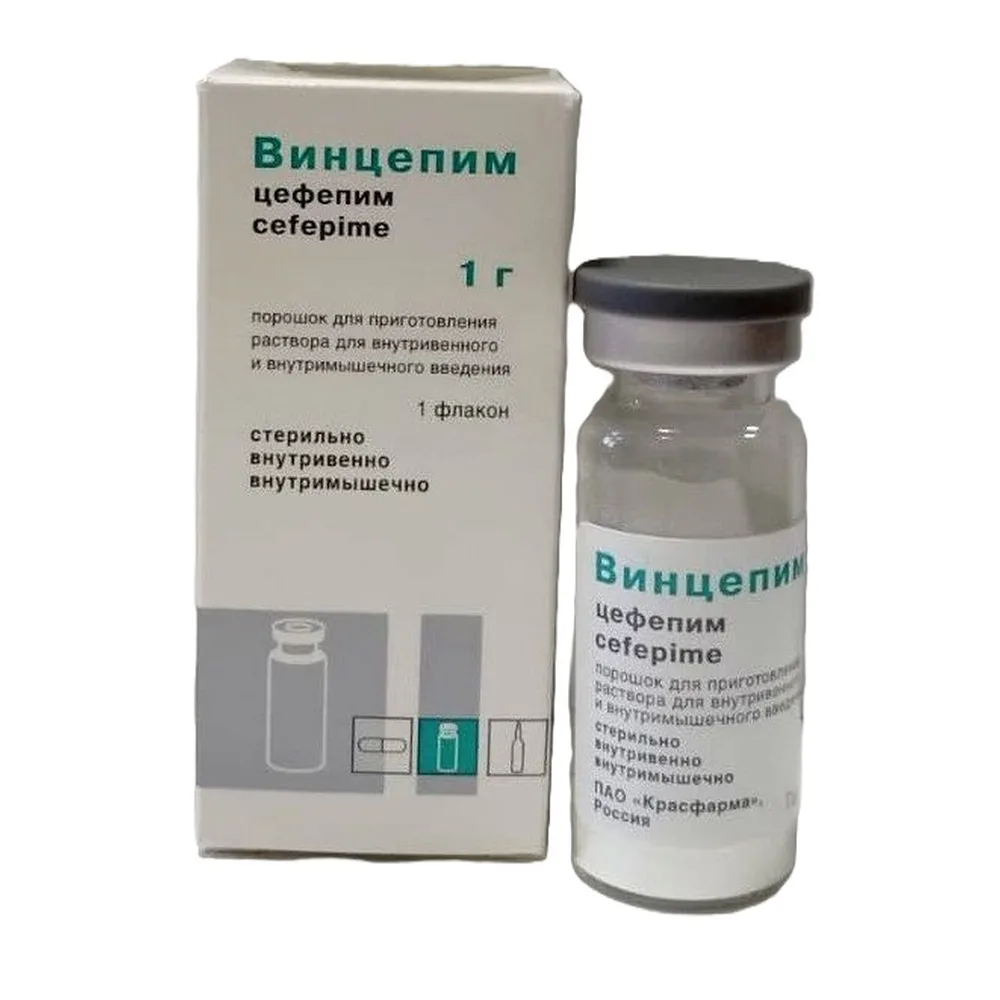
Cefepime · powder for preparing solution for intravenous and intramuscular administration

Thioctic acid · film-coated tablets

Belladonna leaf extract · suppositories