01
Sourced
A licensed Russian pharmacy buys it for you.
No grey-market middlemen, no warehouses we can't audit. Retail purchase, on demand, against your order.

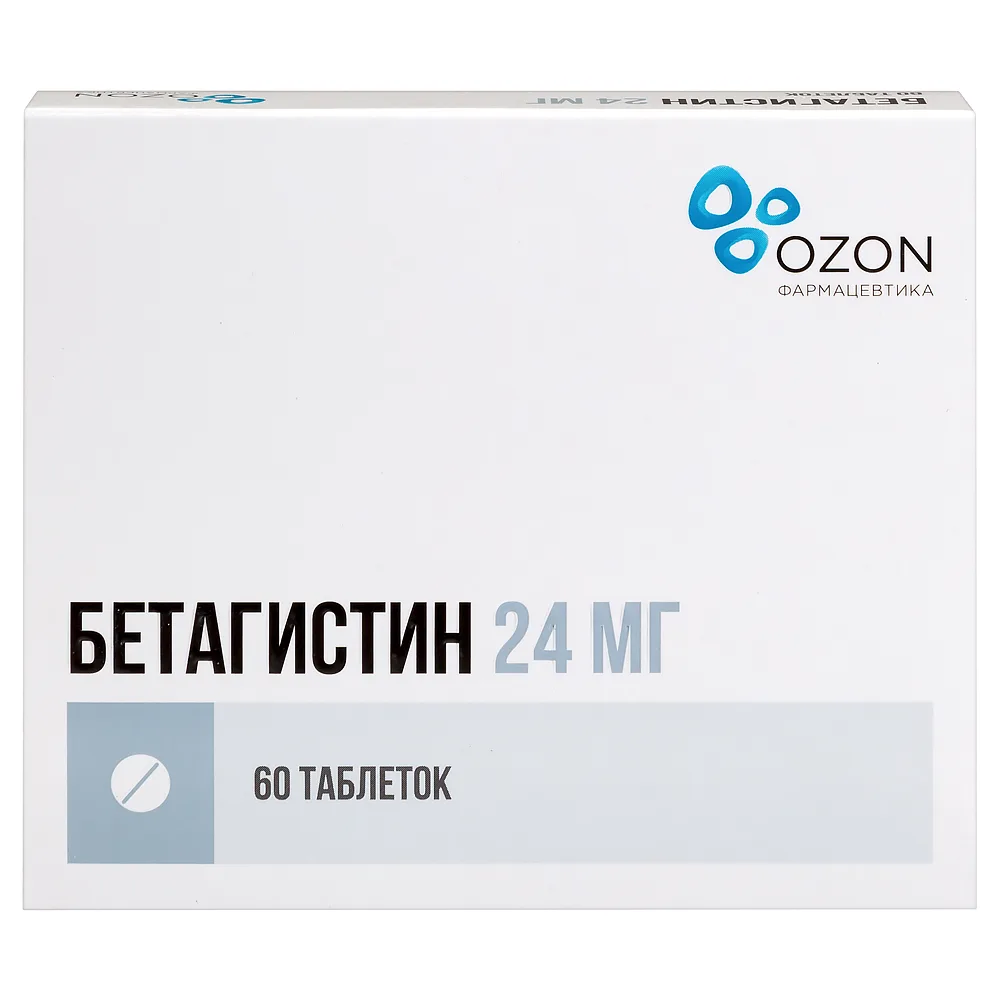 tablets
Betahistine
SKU 114757
Same active ingredient
Other products with Betahistine
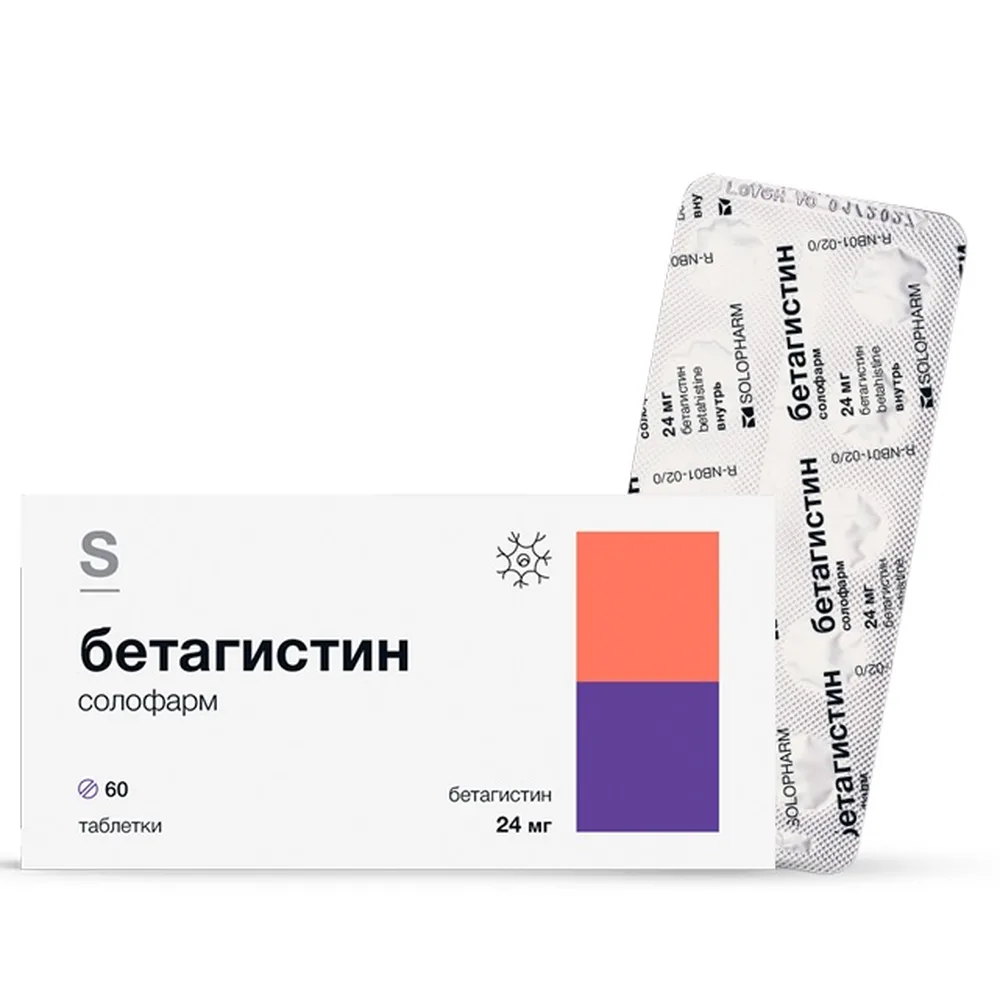
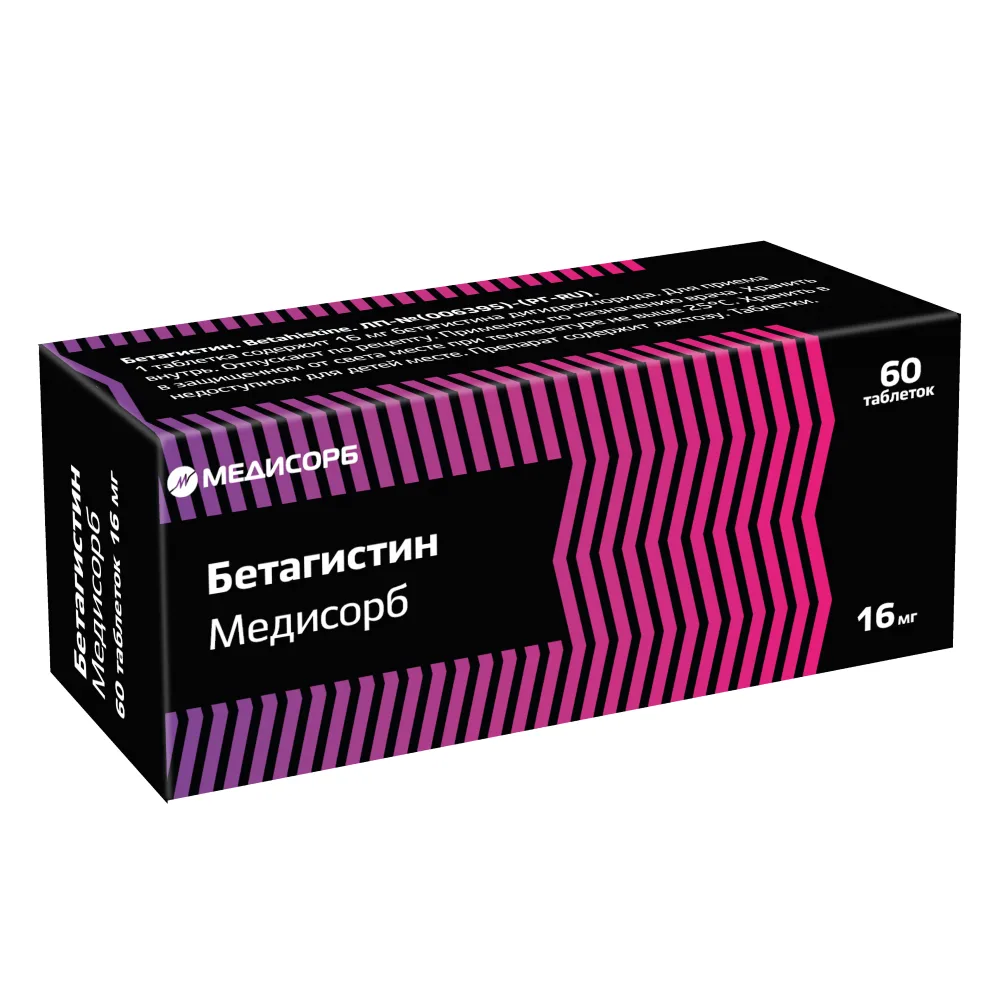
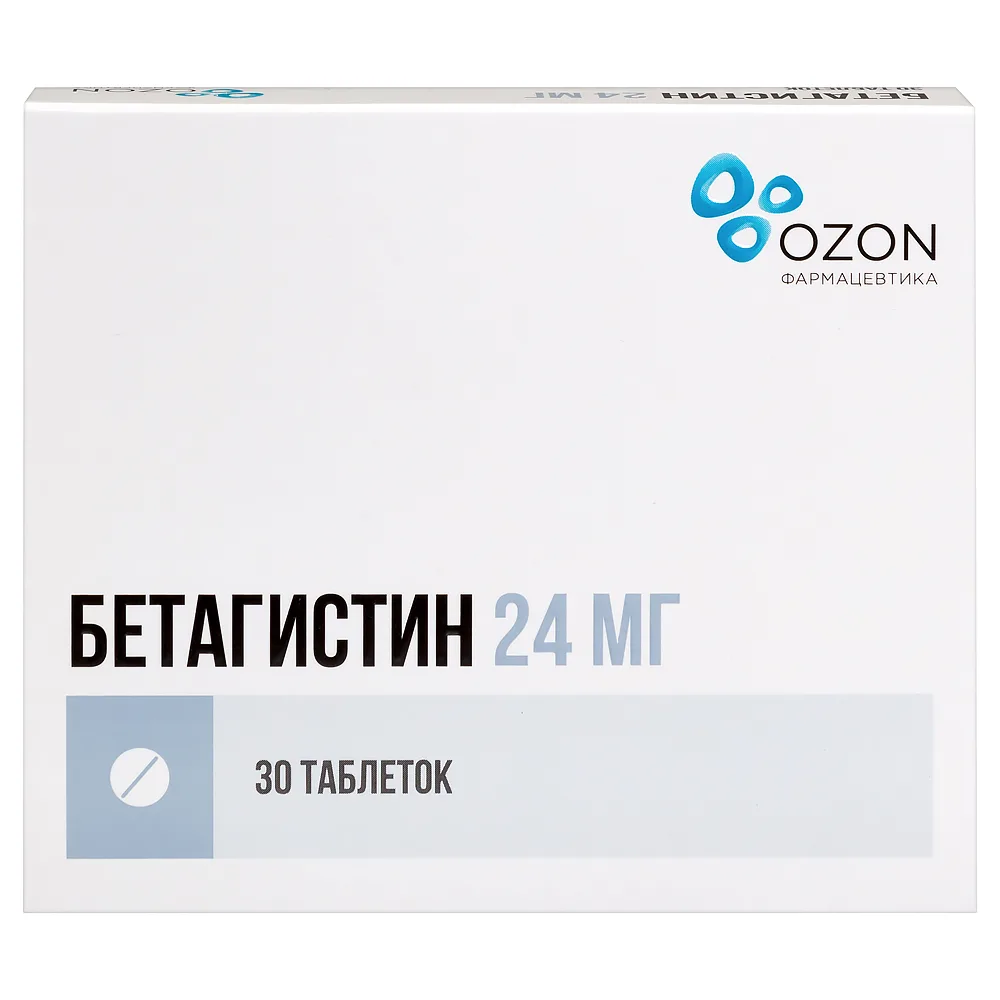
All packagings
Selected · this page
24 60
$11.45
Choose another
5 options
Tap any option to switch the active packaging — adding to cart applies to whatever is currently selected above.
Manufacturer leaflet
Facts from the printed manufacturer leaflet. Sections vary by drug — we only show what's actually in the box.
Indications
Treatment of Meniere's syndrome, characterized by dizziness (accompanied by nausea and vomiting), hearing loss, and tinnitus. Symptomatic treatment of vestibular vertigo.
Лечение синдрома Меньера, характеризующегося головокружением (сопровождающееся тошнотой и рвотой), снижением слуха и шумом в ушах. Симптоматическое лечение вестибулярного головокружения (вертиго).
Section: Method of application and doses
Take orally, during meals, without chewing, with a small amount of liquid, 1 tablet (24 mg) twice a day. The treatment is long-term; improvement is sometimes observed after several weeks, and the best results in some cases are achieved after several months of treatment. The course of treatment is determined individually.
Dose adjustment in elderly patients is not required. Special studies in patients with renal/hepatic insufficiency have not been conducted; however, post-marketing experience suggests that dose adjustment in this category of patients is not necessary.
Внутрь, во время еды, не разжевывая, запивая небольшим количеством жидкости, по 1 таблетке (24 мг) 2 раза в день. Лечение длительное, улучшение иногда наблюдается через несколько недель, наилучшие результаты в отдельных случаях достигаются после нескольких месяцев лечения. Курс лечения определяется индивидуально.
Коррекция дозы у пожилых лиц не требуется. Специальные исследования у пациентов с почечной/печеночной недостаточностью не проводились, однако пострегистрационный опыт дает основание полагать, что коррекция дозы у этой категории пациентов не требуется.
Section: Composition
Each tablet contains the active substance:
betahistine dihydrochloride - 24.0 mg.
Excipients: microcrystalline cellulose - 199.5 mg; corn starch - 30.0 mg; copovidone - 27.0 mg; sodium carboxymethyl starch - 15.0 mg; magnesium stearate - 3.0 mg; colloidal silicon dioxide - 1.5 mg.
Round flat-cylindrical tablets of white or almost white color with a light brown tint, with a bevel and a score line.
Каждая таблетка содержит действующее вещество:
бетагистина дигидрохлорид - 24,0 мг.
Вспомогательные вещества: целлюлоза микрокристаллическая -199,5 мг; крахмал кукурузный -30,0 мг; коповидон - 27,0 мг; карбоксиметилкрах-мап натрия - 15,0 мг; магния стеарат - 3,0 мг; кремния диоксид коллоидный -1,5 мг.
Круглые плоскоцилиндрические таблетки белого или почти белого со светло-коричневым оттенком цвета, с фаской и риской.
Contraindications
Hypersensitivity to the components of the medicinal product, pregnancy, breastfeeding period, age under 18 years (due to lack of data), pheochromocytoma, lactose intolerance, lactase deficiency, glucose-galactose malabsorption.
With caution
Peptic ulcer disease of the stomach or duodenum (in history), bronchial asthma. Use during pregnancy and breastfeeding
Insufficient data to assess the impact of the drug during pregnancy and breastfeeding. Therefore, the drug is contraindicated during pregnancy. Breastfeeding should be discontinued during treatment.
Special instructions
The therapeutic effect in some cases increases over several months from the start of treatment.
Impact on the ability to drive vehicles and operate machinery
The impact on the ability to drive vehicles and operate machinery is absent or negligible.
Гиперчувствительность к компонентам лекарственного препарата, беременность, период грудного вскармливания, детский возраст до 18 лет (в связи с отсутствием данных), феохромоци-тома, непереносимость лактозы, дефицит лактазы, глюкозо-галактозная мапьабсорбция.
С осторожностью
Язвенная болезнь желудка или 12-перстной кишки (в анамнезе), бронхиальная астма. Применение при беременности и в период грудного вскармливания
Недостаточно данных для оценки воздействия препарата в период беременности и грудного вскармливания. В связи с чем, препарат противопоказан при беременности. На время лечения необходимо прекратить грудное вскармливание.
Терапевтический эффект в ряде случаев нарастает в течение нескольких месяцев от начала лечения.
Влияние на способность к вождению автотранспорта и работе с механизмами
Влияние на способность к воадению автотранспорта и работу с механизмами отсутствует или незначительно.
Section: Side Effects
The frequency of side effects was determined according to the following grading of the occurrence of side effects: very common (≥1/10); common (≥1/100,
Section: Overdose
Symptoms: nausea, vomiting, headache, facial skin hyperemia, dizziness, tachycardia, decreased blood pressure, bronchospasm; drowsiness (when taken in a dose up to 640 mg); seizures, cardiopulmonary complications (when taken in a dose greater than 640 mg or in combination with other medications).
Treatment: gastric lavage, activated charcoal, symptomatic.
Interaction
Antihistamine medications reduce the effect of betahistine. The interaction of betahistine with H ^histamine blockers and new receptors when used simultaneously may theoretically affect the effectiveness of one of these agents. Cases of interaction or incompatibility with other medications are unknown. Based on in vitro data, the absence of inhibition of cytochrome P450 isoenzyme activity in vivo can be assumed. In vitro data showed inhibition of betahistine metabolism by drugs that inhibit monoamine oxidase (MAO), including MAO subtype B (e.g., selegiline).
Частота побочных эффектов определялась соответственно следующей градацией частоты возникновения побочных эффектов: очень частые (?1/10); частые (?1/100,
Симптомы: тошнота, рвота, головная боль, гиперемия кожи лица, головокружение, тахикардия, снижение артериального давления, бронхоспазм; сонливость (при приеме в дозе до 640 мг); судороги, сердечно-легочные осложнения (при приеме в дозе более 640 мг или в сочетании с другими лекарственными средствами).
Лечение: промывание желудка, прием активированного угля, симптоматическое.
Антигистаминные лекарственные средства снижают эффект бетагистина. Взаимодействие бетагистина с блокаторами Н ^гистам и новых рецепторов при одновременном применении может теоретически влиять на эффективность одного из этих средств. Случаи взаимодействия или несовместимости с другими лекарственными препаратами неизвестны. Основываясь на данных in vitro, можно предположить отсутствие ингибирования активности изоферментов цитохрома Р450 in vivo. Данные in vitro показали инги-
бирование метаболизма бетагистина под действием препаратов, которые ингибируют моноаминоксидазу (МАО), включая МАО подтип В (например, селегилин).
Pharmacodynamics
Agonist of H1-histamine receptors in the blood vessels of the inner ear and antagonist of H3-histamine receptors in the vestibular nuclei of the central nervous system (CNS). By relaxing the precapillary sphincters of the blood vessels in the inner ear, it improves blood circulation in the vascular strip of the inner ear. It enhances blood flow in the brain, dose-dependently reduces the generation of action potentials in the neurons of the lateral and medial vestibular nuclei. It accelerates the recovery of vestibular function after unilateral vestibular neurectomy, facilitating and speeding up central vestibular compensation (due to antagonism with H3-histamine receptors). It alleviates symptoms in Meniere's syndrome and vertigo.
Section: Pharmacokinetics
Rapidly and almost completely absorbed in the gastrointestinal tract. When taken with food, the maximum concentration of betahistine in the blood is lower than when taken on an empty stomach. However, the total absorption is the same in both cases, indicating that food intake slows down absorption. It is absorbed quickly, with plasma protein binding of less than 5%. The time to reach maximum concentration in plasma is 1 hour.
Metabolized to inactive metabolites: 2-pyridylacetic acid (the main metabolite) and dimethylbetahistine. The maximum concentration of 2-pyridylacetic acid in plasma (or urine) is reached one hour after administration. The half-life is approximately 3.5 hours. 85-90% is excreted by the kidneys as 2-pyridylacetic acid within a day. The excretion of betahistine and dimethylbetahistine by the kidneys is negligible. Only a small portion (about 10%) of betahistine and its metabolites is excreted by the intestine. The rate of excretion remains constant, indicating linear pharmacokinetics.
Агонист Н1-гистаминовых рецепторов сосудов внутреннего уха и антагонист Н3-гистаминовых рецепторов вестибулярных ядер центральной нервной системы (ЦНС). За счет расслабления прекапиллярных сфинктеров сосудов внутреннего уха улучшает кровообращение в сосудистой полоске внутреннего уха. Усиливает кровоток в головном мозге, дозозависимо снижает генерацию потенциалов действия в нейронах латеральных и медиальных вестибулярных ядер. Ускоряет восстановление вестибулярной функции после односторонней вестибулярной нейроэкто-мии, облегчая и ускоряя центральную вестибулярную компенсацию (за счет антагонизма с Н3-гистаминовыми рецепторами). Облегчает симптоматику при синдроме Меньера и вертиго.
Быстро и практически полностью всасывается в желудочно-кишечном тракте. При приеме с пищей максимальная концентрация бетагистина в крови ниже, чем при приеме натощак. Однако суммарная абсорбция одинакова в обоих случаях, что указывает на то, что прием пищи замедляет всасывание. Абсорбируется быстро, связь с белками плазмы - менее 5 %. Время достижения
максимальной концентрации в плазме крови -1 ч.
Метаболизируется до неактивных метаболитов: 2-пиридилуксусной кислоты (основной метаболит) и диметилбетагистина. Максимальная концентрация 2-пиридилуксусной кислоты в плазме (или моче) достигается через час после приема. Период полувыведения составляет приблизительно 3,5 часа. 85-90% выводится почками в виде 2-пиридилуксусной кислоты в течение суток. Выведение бетагистина и диметилбетагистина почками незначительно. Кишечником выводится лишь небольшая часть (около 10%) бетагистина и его метаболитов. Скорость выведения остается постоянной, указывая на линейность фармакокинетики.
RU name Бетагистин 24 мг 60 шт. таблетки
How we fulfill
Three checkpoints between the pharmacy shelf and your door. You see every one.
01
No grey-market middlemen, no warehouses we can't audit. Retail purchase, on demand, against your order.
02
A photo of your actual parcel in its original retail packaging lands in your inbox before it ships. Like this →
 Real customer parcel
03
To 120+ countries. Most parcels arrive in 7–18 days.


Dimethindene · ointment for external use
Ascorbic acid · powder for solution preparation