01
Sourced
A licensed Russian pharmacy buys it for you.
No grey-market middlemen, no warehouses we can't audit. Retail purchase, on demand, against your order.

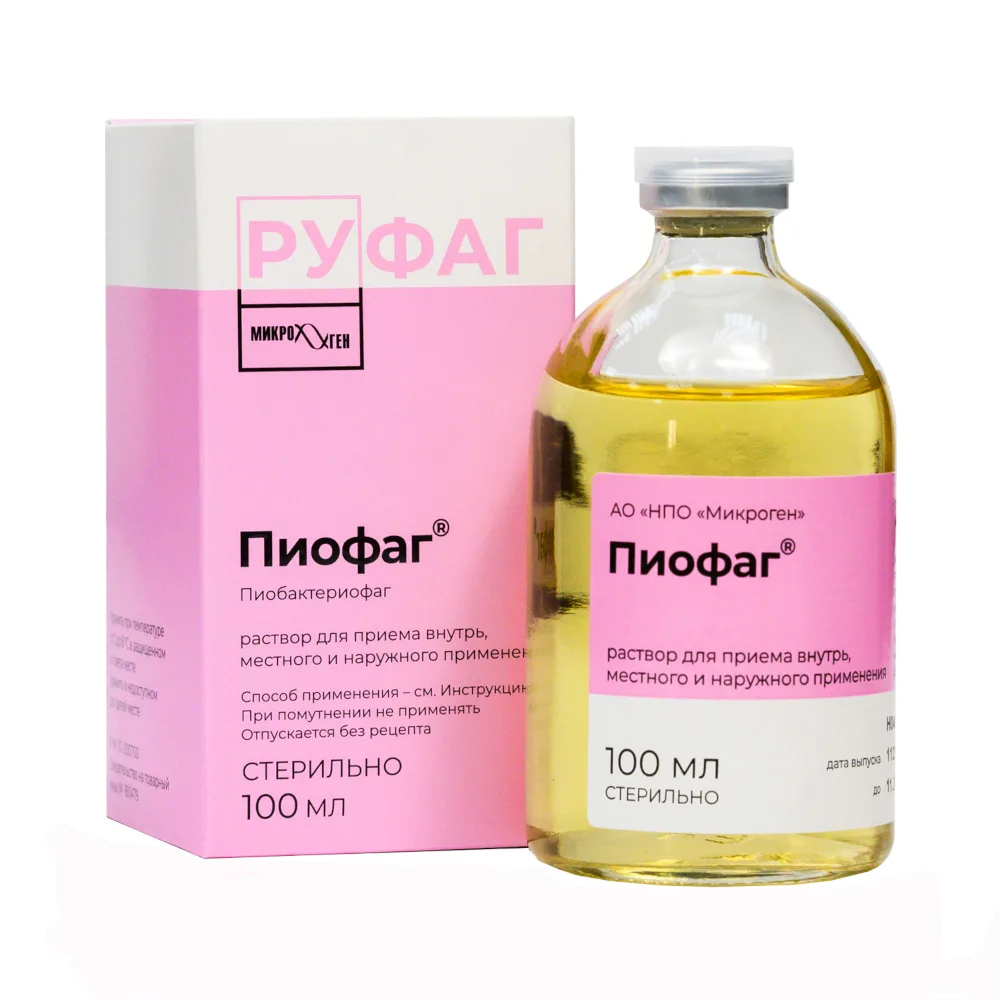 oral solution
Piobacteriophage
oral solution
SKU 81350
Same active ingredient
Other products with Piobacteriophage
Manufacturer leaflet
Facts from the printed manufacturer leaflet. Sections vary by drug — we only show what's actually in the box.
Treatment and prevention of purulent-inflammatory and intestinal diseases caused by staphylococci, enterococci, streptococci, Pseudomonas aeruginosa, Klebsiella, pathogenic Escherichia coli of various serogroups, and Proteus with internal, rectal, and external use:
• ear, throat, nose, respiratory tract, and lung diseases - sinusitis, otitis media, angina, pharyngitis, laryngitis, tracheitis, bronchitis, pneumonia, pleurisy;
• surgical infections - wound suppuration, burns, abscess, phlegmon, furuncles, carbuncles, hidradenitis, paronychia, paraproctitis, mastitis, bursitis, osteomyelitis;
• urogenital infections - urethritis, cystitis, pyelonephritis, colpitis, endometritis, salpingooophoritis;
• post-traumatic conjunctivitis, keratoconjunctivitis, purulent corneal ulcers, and iridocyclitis;
• enteral infections - gastroenterocolitis, cholecystitis, dysbiosis;
• generalized septic diseases;
- purulent-inflammatory diseases in newborns - omphalitis, pyoderma, conjunctivitis, gastroenterocolitis, sepsis, etc.;
• other diseases caused by staphylococci, streptococci, enterococci, Proteus, Klebsiella pneumoniae and oxytoca, Pseudomonas aeruginosa, and Escherichia coli.
For preventive purposes, the drug is used for the treatment of surgical and freshly infected wounds, as well as for the prevention of nosocomial infections based on epidemiological indications.
Лечение и профилактика гнойно-воспалительных и кишечных заболеваний, вызванных стафилококками, энтерококками, стрептококками, синегнойной палочкой, клебсиеллами, патогенной кишечной палочкой различных серогрупп, протеем при внутреннем, ректальном и наружном применении:
• заболевания уха, горла, носа, дыхательных путей и легких - воспаления пазух носа, среднего уха, ангина, фарингит, ларингит, трахеит, бронхит, пневмония, плеврит;
• хирургические инфекции - нагноения ран, ожоги, абсцесс, флегмона, фурункулы, карбункулы, гидроаденит, панариции, парапроктит, мастит, бурсит, остеомиелит;
• урогенитальные инфекции - уретрит, цистит, пиелонефрит, кольпит, эндометрит, сальпингоофорит;
• посттравматические конъюнктивиты, кератоконъюнктивиты, гнойные язвы роговицы и иридоциклиты;
• энтеральные инфекции - гастроэнтероколит, холецистит, дисбактериоз;
• генерализованные септические заболевания;
-гнойно-воспалительные заболевания новорожденных - омфалит, пиодермия, конъюнктивит, гастроэнтероколит, сепсис и др.;
• другие заболевания, вызванные бактериями стафилококков, стрептококков, энтерококков, протея, клебсиелл пневмонии и окситока, синегнойной и кишечной палочек.
С профилактической целью препарат используют для обработки операционных и свежеинфицированных ран, а также для профилактики внутрибольничных инфекций по эпидемическим показаниям.
Treatment of purulent-inflammatory diseases with localized lesions should be conducted both locally and orally for 7-20 days (based on clinical indications).
Depending on the nature of the infection focus, bacteriophage is applied:
1. Locally in the form of irrigation, compresses, and tamponade with liquid phage in an amount of up to 200 ml depending on the size of the affected area. In the case of abscesses, the bacteriophage is introduced into the cavity after the pus is removed via puncture. The amount of the administered preparation should be slightly less than the volume of the removed pus. In osteomyelitis, after appropriate surgical treatment, 10-20 ml of bacteriophage is poured into the wound.
2. Introduction into cavities - pleural, joint, and other limited cavities up to 100 ml of bacteriophage, after which a capillary drain is left in place, through which bacteriophage is reintroduced over several days.
3. In cases of cystitis, pyelonephritis, and urethritis, the preparation is taken orally. If the bladder or renal pelvis is drained, bacteriophage is introduced through a cystostomy or nephrostomy 1-2 times a day at 20-50 ml into the bladder and 5-7 ml into the renal pelvis.
4. In cases of purulent-inflammatory gynecological diseases, the preparation is introduced into the vaginal and uterine cavity at a dose of 5-10 ml once daily.
5. In cases of purulent-inflammatory diseases of the ear, throat, and nose, the preparation is administered at a dose of 2-10 ml 1-3 times a day. Bacteriophage is used for rinsing, washing, instilling, and introducing moistened tampons (leaving them for 1 hour).
6. In cases of conjunctivitis and keratoconjunctivitis, the preparation is instilled at 2-3 drops 4-5 times a day; in the case of purulent corneal ulcer - 4-5 drops; in purulent iridocyclitis, the preparation is used at 6-8 drops every 3 hours in combination with oral administration.
7. In the treatment of stomatitis and chronic generalized periodontitis, the preparation is used for mouth rinses 3-4 times a day at a dose of 10-20 ml, as well as by introducing tampons soaked in pyobacteriophage into periodontal pockets for 5-10 minutes.
8. In intestinal forms of the disease, diseases of internal organs, dysbiosis, bacteriophage is applied orally and in enemas. Orally, bacteriophage is given 3 times a day on an empty stomach 1 hour before meals. As an enema, it is prescribed once a day instead of one oral dose.
Recommended dosages of the preparation
Age Dose per administration (in ml)
Orally Enema
Up to 6 months 5 10
From 6 months to 1 year 10 20
From 1 year to 3 years 15 30
From 3 to 8 years 20 40
From 8 years and older 30 50
The use of bacteriophages does not exclude the use of other antibacterial preparations. If chemical antiseptics were used before the application of bacteriophage for wound treatment, the wound should be thoroughly washed with sterile 0.9% sodium chloride solution.
Use of bacteriophage in children (up to 6 months). In cases of sepsis, enterocolitis in newborns, including premature infants, bacteriophage is used in the form of high enemas (via a gas outlet tube or catheter) 2-3 times a day (see table). If there is no vomiting or regurgitation, the preparation can be administered orally. In this case, it is mixed with breast milk. A combination of rectal (in enemas) and oral (by mouth) administration of the preparation is possible. The course of treatment is 5-15 days. In cases of recurrent disease, repeated courses of treatment may be conducted. For the prevention of sepsis and enterocolitis in cases of intrauterine infection or the risk of nosocomial infection in newborns, bacteriophage is used in the form of enemas 2 times a day for 5-7 days.
In the treatment of omphalitis, pyodermas, infected wounds, the preparation is used in the form of applications twice daily (a gauze pad is soaked with bacteriophage and applied to the umbilical wound or the affected area of the skin).
If no improvement occurs after treatment, or if symptoms worsen, or new symptoms appear, consult a doctor. Use the preparation only according to the indications, method of application, and dosages specified in the instructions.
Side effects. Allergic reactions may occur. If you experience side effects listed in the instructions, or if they worsen, or if you notice any other side effects not listed in the instructions, inform your doctor.
Overdose. No cases of overdose have been reported to date.
Лечение гнойно-воспалительных заболеваний с локализованными поражениями должно проводиться одновременно как местно, так и через рот, 7-20 дней (по клиническим показаниям).
В зависимости от характера очага инфекции бактериофаг применяют:
1. Местно в виде орошения, примочек и тампонирования жидким фагом в количестве до 200 мл в зависимости от размеров пораженного участка. При абсцессах бактериофаг вводят в полость очага после удаления гноя с помощью пункции. Количество вводимого препарата должно быть несколько меньше объема удаленного гноя. При остеомиелите после соответствующей хирургической обработки в рану вливают бактериофаг по 10-20 мл.
2. Введение в полости - плевральную, суставную и другие ограниченные полости до 100 мл бактериофага, после чего оставляют капиллярный дренаж, через который в течение нескольких дней повторно вводят бактериофаг.
3. При циститах, пиелонефритах, уретритах препарат принимают внутрь. В случае, если полость мочевого пузыря или почечной лоханки дренированы, бактериофаг вводят через цистостому или нефростому 1-2 раза в день по 20-50 мл в мочевой пузырь и по 5-7 мл в почечную лоханку.
4. При гнойно-воспалительных гинекологических заболеваниях препарат вводят в полость вагины, матки в дозе 5-10 мл ежедневно однократно.
5. При гнойно-воспалительных заболеваниях уха, горла, носа препарат вводят в дозе 2-10 мл 1-3 раза в день. Бактериофаг используют для полоскания, промывания, закапывания, введение смоченных турунд (оставляя их на 1 час).
6. При конъюнктивитах и кератоконъюнктивитах препарат закапывают по
2-3 капли 4-5 раз в день, при гнойной язве роговицы - по 4-5 капель, при гнойных иридоциклитах препарат применяют по 6-8 капель каждые 3 часа в сочетании с приемом
внутрь.
7. При лечении стоматитов и хронических генерализованных пародонтитов препарат используют в виде полосканий полости рта 3-4 раза в день в дозе 10-20 мл, а также введением в пародонтальные карманы турунд, пропитанных пиобактериофагом, на 5-10 минут.
8. При кишечных формах заболевания, заболеваниях внутренних органов, дисбактериозе бактериофаг применяют через рот и в клизме. Через рот бактериофаг дают 3 раза в сутки натощак за 1 час до еды. В виде клизм назначают 1 раз в день вместо одного приема через рот.
Рекомендуемые дозировки препарата
Возраст Доза на 1 прием (в мл)
через рот в клизме
До 6 месяцев 5 10
От 6 месяцев до 1 года 10 20
От 1 года до 3 лет 15 30
С 3 до 8 лет 20 40
От 8 лет и старше 30 50
Применение бактериофагов не исключает использования других антибактериальных препаратов. В случае, если до применения бактериофага для лечения ран применялись химические антисептики, рана должна быть тщательно промыта стерильным 0,9 % раствором натрия хлорида.
Применение бактериофага у детей (до 6 месяцев). При сепсисе, энтероколите новорожденных, включая недоношенных детей, бактериофаг применяют в виде высоких клизм (через газоотводную трубку или катетер) 2-3 раза в сутки (см. табл.). При отсутствии рвоты и срыгивания возможно применение препарата через рот. В этом случае он смешивается с грудным молоком. Возможно сочетание ректального (в клизмах) и перорального (через рот) применения препарата. Курс лечения 5-15 дней. При рецидивирующем течении заболевания возможно проведение повторных курсов лечения. С целью профилактики сепсиса и энтероколита при внутриутробном инфицировании или опасности возникновения внутрибольничной инфекции у новорожденных детей бактериофаг применяют в виде клизм 2 раза в день в течение 5-7 дней.
При лечении омфалитов, пиодермий, инфицированных ран препарат применяют в виде аппликаций ежедневно двукратно (марлевую салфетку смачивают бактериофагом и накладывают на пупочную ранку или на пораженный участок кожи).
Если после лечения улучшения не наступает или симптомы усугубляются, или появляются новые симптомы, необходимо проконсультироваться с врачом. Применяйте препарат только согласно тем показаниям, тому способу применения и в тех дозах, которые указаны в инструкции.
Побочное действие. Возможны аллергические реакции. Если у Вас отмечаются побочные эффекты, указанные в инструкции, или они усугубляются, или Вы заметили любые другие побочные эффекты, не указанные в инструкции, сообщите об этом врачу.
Передозировка. Случаи передозировки до настоящего времени не зарегистрированы.
In 1 ml of the medicinal product, there is:
Active ingredient:
Sterile purified filtrates of bacteriophage lysates of Staphylococcus, Enterococcus, Streptococcus, Escherichia coli, Proteus vulgaris, Proteus mirabilis (with activity according to Appelman - not less than 10^-5), Pseudomonas aeruginosa, Klebsiella pneumoniae, Klebsiella oxytoca (with activity according to Appelman - not less than 10^-4) - up to 1 ml.
Excipients:
Preservative - 8-hydroxyquinoline sulfate - 0.0001 g/ml (calculated content);
or 8-hydroxyquinoline sulfate monohydrate calculated as 8-hydroxyquinoline sulfate - 0.0001 g/ml (calculated content).
A transparent liquid of yellow color with varying intensity, a greenish tint is possible.
В 1 мл лекарственного препарата содержится:
Действующее вещество:
Стерильные очищенные фильтраты фаголизатов бактерий Staphylococcus, Enterococcus, Streptococcus, Escherichia coli, Proteus vulgaris, Proteus mirabilis (с активностью по Аппельману - не менее 10-5), Pseudomonas aeruginosa, Klebsiella pneumoniae, Klebsiella oxytoca (с активностью по Аппельману - не менее 10-4) - до 1 мл.
Вспомогательные вещества:
консервант - 8-гидроксихинолина сульфат - 0,0001 г/мл (содержание расчетное);
или 8-гидроксихинолина сульфата моногидрат в пересчете на 8-гидроксихинолина сульфат - 0,0001 г/мл (содержание расчетное).
Прозрачная жидкость желтого цвета различной интенсивности, возможен зеленоватый оттенок.
Hypersensitivity to the components of the medication.
Use during pregnancy and breastfeeding. The use of the drug is advisable during pregnancy and breastfeeding.
Special instructions. An important condition for effective phage therapy is the prior determination of the pathogen's sensitivity to the bacteriophage and the early use of the drug. The drug is unsuitable for use if the bottle is damaged or improperly labeled, if the expiration date has passed, or if there is cloudiness. Due to the presence of a nutrient medium in the drug, which can allow bacteria from the environment to grow and cause cloudiness, the following rules must be observed when opening the bottle:
• thoroughly wash hands;
• treat the cap with an alcohol-containing solution;
• remove the cap without opening the stopper;
• do not place the stopper with the inner surface on the table or other objects;
• do not leave the bottle open;
• store the opened bottle only in the refrigerator. Before use, the bottle with the bacteriophage must be shaken and inspected. The drug should be clear. Opening the bottle and extracting the required volume of the drug can be done with a sterile syringe by puncturing the stopper. The drug from the opened bottle, provided that the storage conditions, the above rules, and the absence of cloudiness are maintained, can be used throughout its shelf life.
Effect on the ability to drive vehicles and operate machinery. The drug does not affect the ability to perform potentially dangerous activities that require increased attention and quick psychomotor reactions (including driving vehicles, working with moving machinery).
Гиперчувствительность к компонентам препарата.
Применение при беременности и в период грудного вскармливания.
Целесообразно применение препарата при беременности и в период грудного вскармливания.
Особые указания. Важным условием эффективной фаготерапии является предварительное определение чувствительности возбудителя к бактериофагу и раннее применение препарата.
Не пригоден к применению препарат во флаконах с нарушенной целостностью или маркировкой, при истекшем сроке годности, при помутнении.
Вследствие содержания в препарате питательной среды, в которой могут развиваться бактерии из окружающей среды, вызывая помутнение препарата, необходимо при вскрытии флакона соблюдать следующие правила:
• тщательно мыть руки;
• обработать колпачок спиртсодержащим раствором;
• снять колпачок, не открывая пробки;
• не класть пробку внутренней поверхностью на стол или другие предметы;
• не оставлять флакон открытым;
• вскрытый флакон хранить только в холодильнике.
Перед использованием флакон с бактериофагом необходимо встряхнуть и просмотреть. Препарат должен быть прозрачным.
Вскрытие флакона и извлечение необходимого объема препарата может проводиться стерильным шприцем путем прокола пробки. Препарат из вскрытого флакона при соблюдении условий хранения, вышеперечисленных правил и отсутствии помутнения, может быть использован в течение всего срока годности.
Влияние на способность управлять транспортными средствами, механизмами.
Препарат не оказывает влияния на способность к выполнению потенциально опасных видов деятельности, требующих повышенной концентрации внимания и быстроты психомоторных реакций (в том числе, управление транспортными средствами, работа с движущимися механизмами).
The use of the drug is possible in combination with other medications, including antibiotics.
Применение препарата возможно в сочетании с другими лекарственными средствами, в том числе с антибиотиками.
The drug induces specific lysis of the bacteria Staphylococcus, Enterococcus, Streptococcus, Escherichia coli, Proteus vulgaris, Proteus mirabilis, Pseudomonas aeruginosa, Klebsiella pneumoniae, Klebsiella oxytoca.
Препарат вызывает специфический лизис бактерий Staphylococcus, Enterococcus, Streptococcus, Escherichia coli, Proteus vulgaris, Proteus mirabilis, Pseudomonas aeruginosa, Klebsiella pneumoniae, Klebsiella oxytoca.
Piofag is an antibacterial agent available in the form of a solution for oral administration, as well as for local and external use. The solution is effective in treating various infectious diseases caused by bacteria, including urinary tract infections, skin infections, and wounds. The composition of the solution, which contains filtrates of phagolysates from bacteria such as Staphylococcus, Enterococcus, Streptococcus, Escherichia coli, Proteus vulgaris, and Proteus mirabilis, helps eliminate pathogenic microorganisms and reduce inflammation. The medication can be prescribed for the treatment of various patient categories, including adults and children, according to a doctor's recommendations. Piofag is available in 100 ml bottles.
Пиофаг - это антибактериальное средство, доступное в форме раствора для приема внутрь, а также для местного и наружного применения. Раствор эффективен при лечении различных инфекционных заболеваний, вызванных бактериями, в том числе инфекций мочевыводящих путей, кожных инфекций и ран. Состав раствора, который содержит фильтраты фаголизатов бактерий Staphylococcus, Enterococcus, Streptococcus, Escherichia coli, Proteus vulgaris, Proteus mirabilis, помогает устранить патогенные микроорганизмы и снижает воспаление. Препарат можно назначать для лечения различных категорий пациентов, включая взрослых и детей , в соответствии с рекомендациями врача. Пиофагдоступен в флаконах по 100 мл.
Transportation conditions. At a temperature of 2 to 8 °C; transportation at a temperature of 9 to 25 °C is allowed for no more than 1 month.
Storage conditions. At a temperature of 2 to 8 °C in a protected from light place.
Условия транспортирования. При температуре от 2 до 8 °С, допускается транспортирование при температуре от 9 до 25 °С не более 1 месяца.
Условия хранения. При температуре от 2 до 8 °С в защищенном от света месте.
RU name Пиофаг 100 мл флакон раствор для приема внутрь местного и наружного применения
How we fulfill
Three checkpoints between the pharmacy shelf and your door. You see every one.
01
No grey-market middlemen, no warehouses we can't audit. Retail purchase, on demand, against your order.
02
A photo of your actual parcel in its original retail packaging lands in your inbox before it ships. Like this →
 Real customer parcel
03
To 120+ countries. Most parcels arrive in 7–18 days.
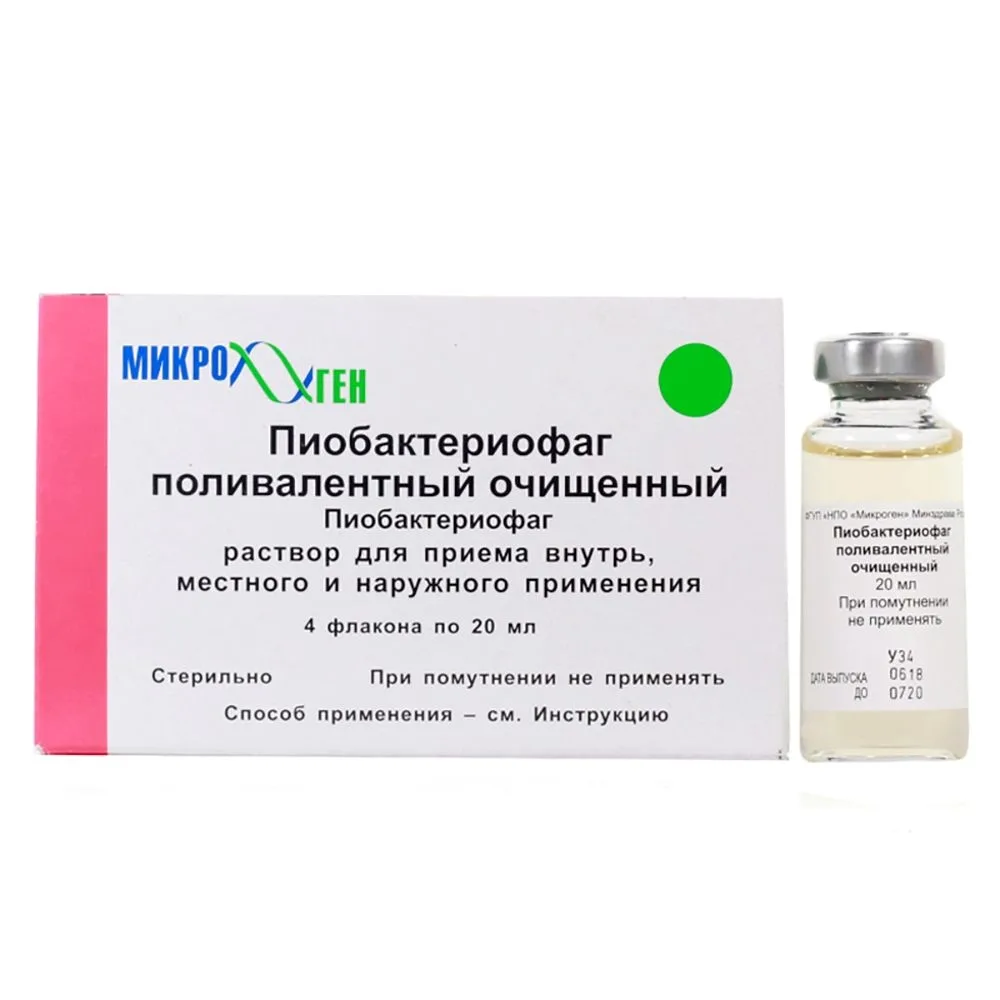
Piobacteriophage · oral solution
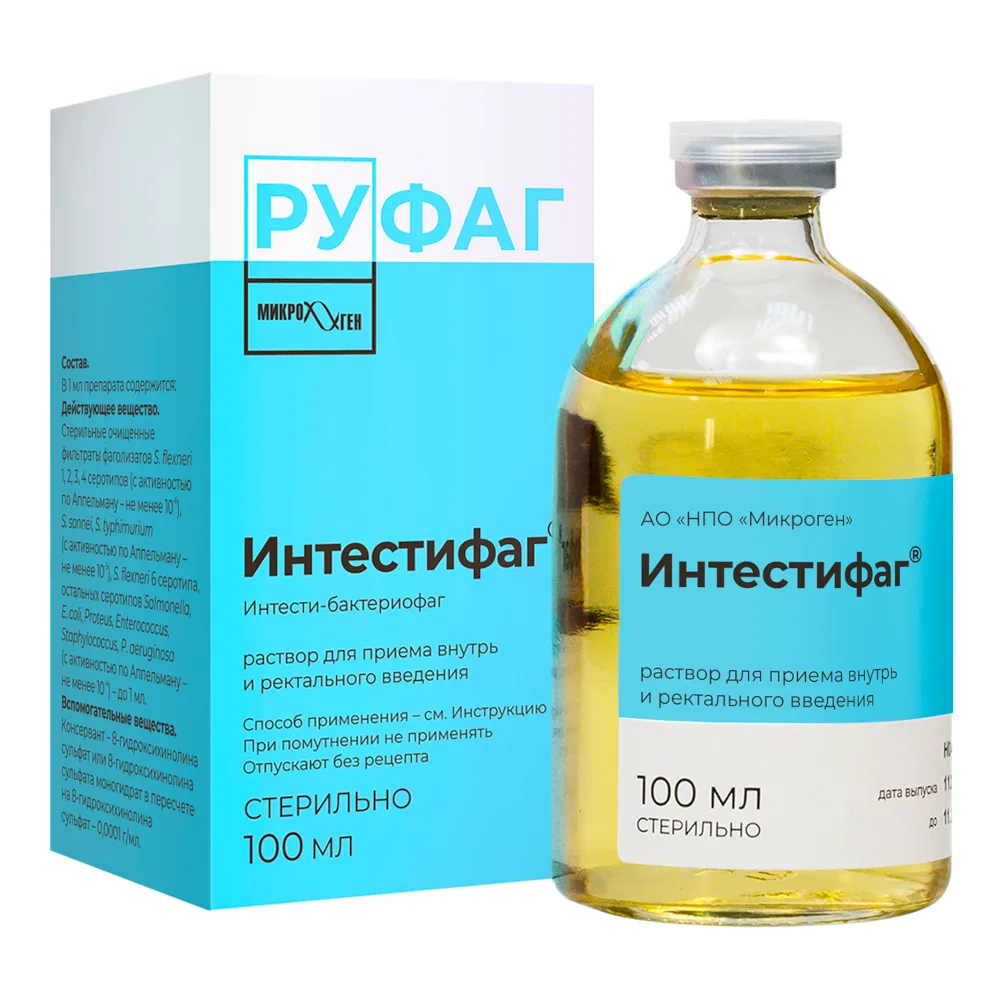
Intesti-bacteriophage · oral solution

Hydroxyethyl dimethyl dihydropyrimidine · tablets
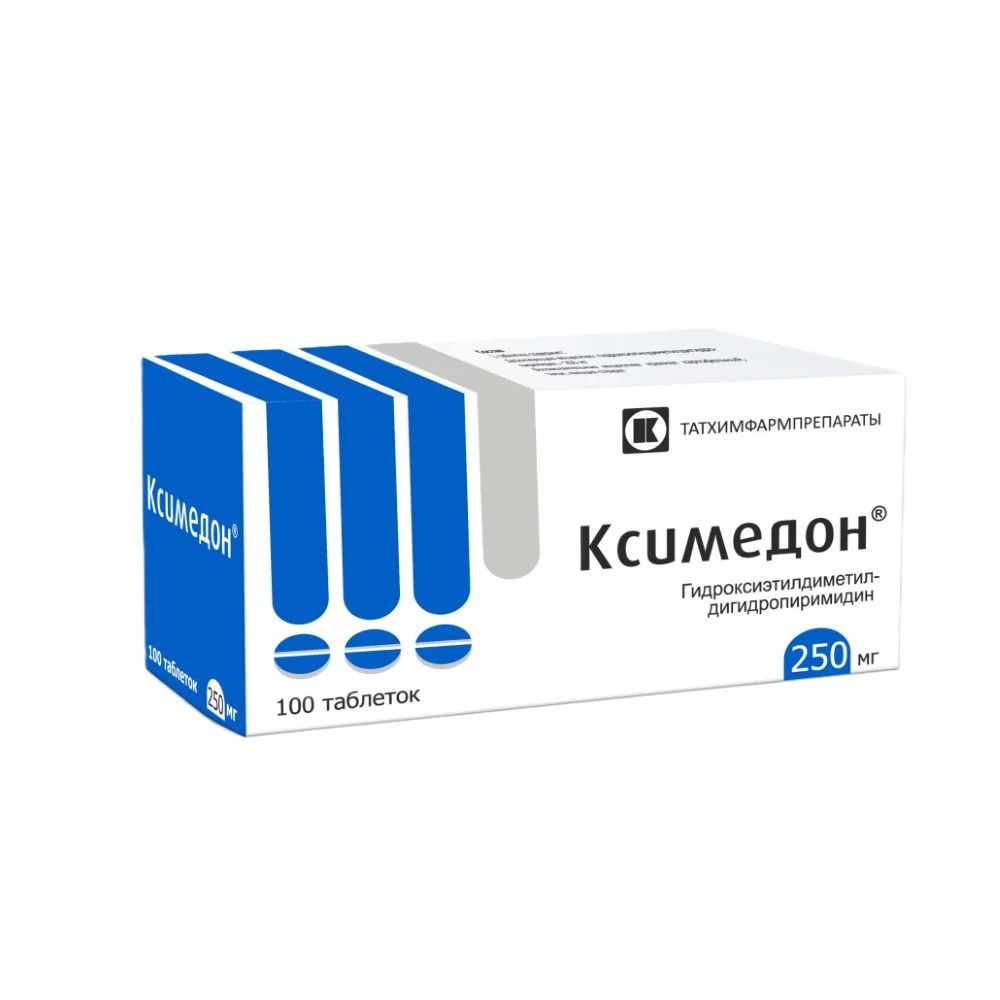
Hydroxyethyl dimethyl dihydropyrimidine · tablets
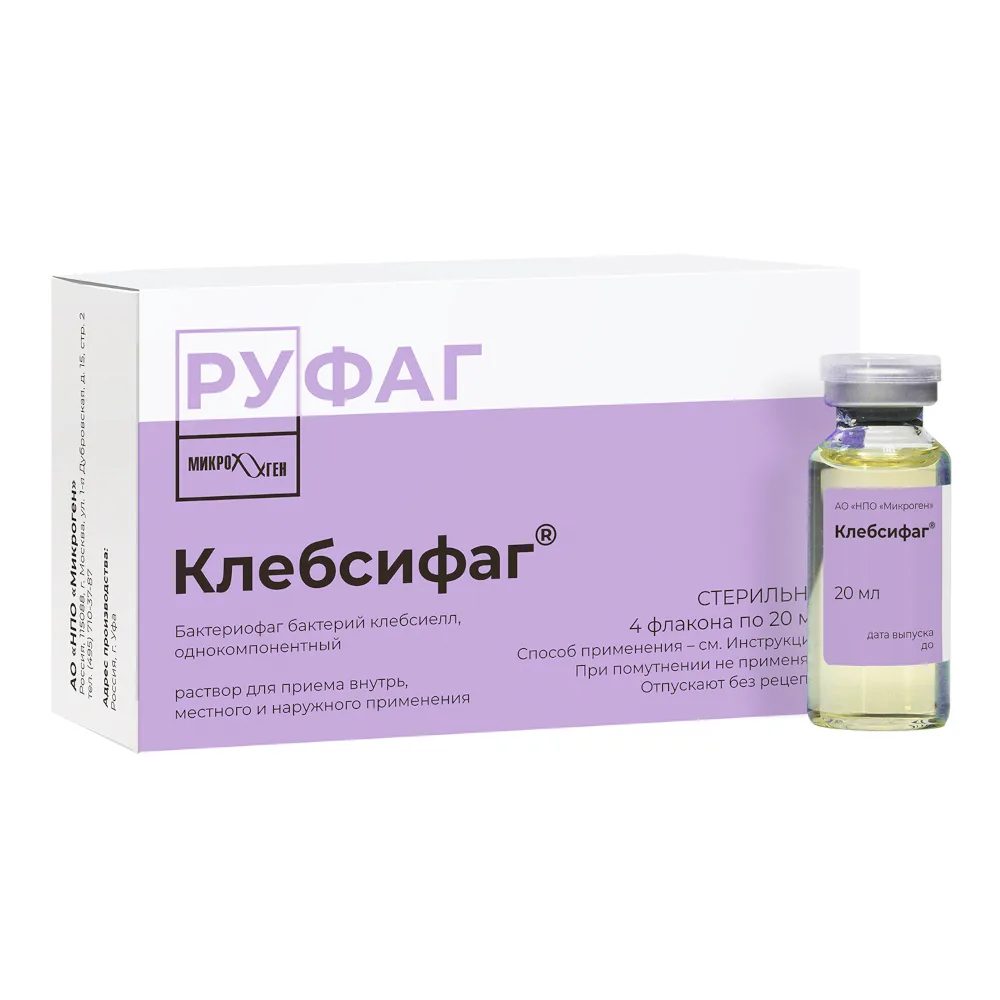
Bacteriophage of Klebsiella bacteria monocomponent · oral solution
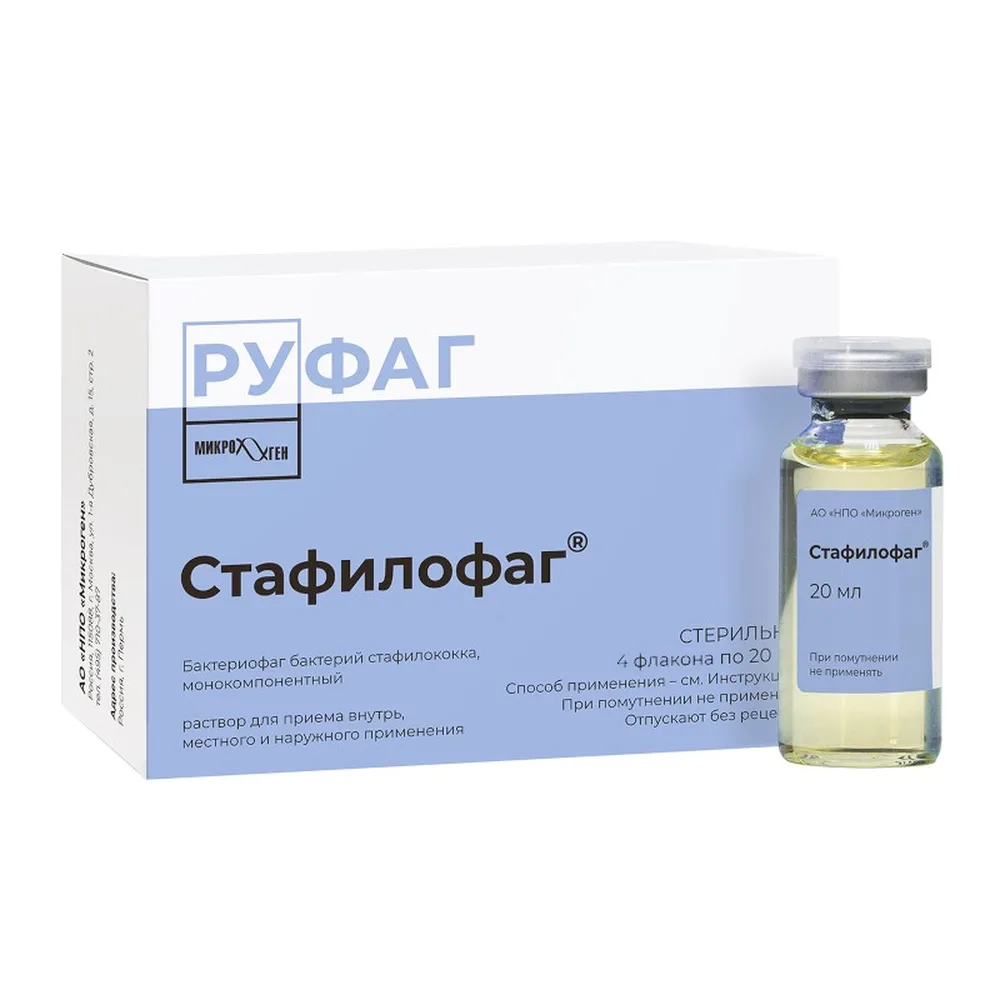
Bacteriophage Staphylococcus monocomponent · oral solution