01
Sourced
A licensed Russian pharmacy buys it for you.
No grey-market middlemen, no warehouses we can't audit. Retail purchase, on demand, against your order.

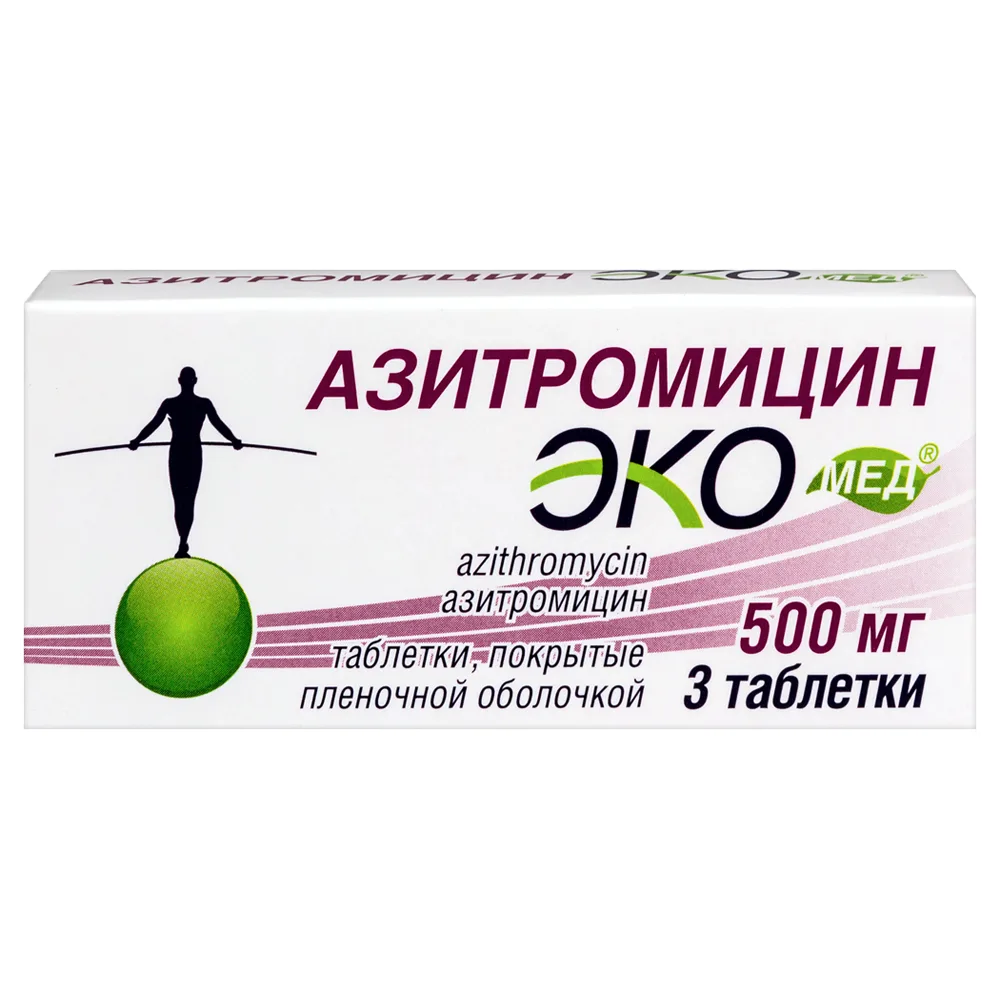 tablets, film-coated
Azithromycin
SKU 115424
Same active ingredient
Other products with Azithromycin
All packagings
Selected · this page
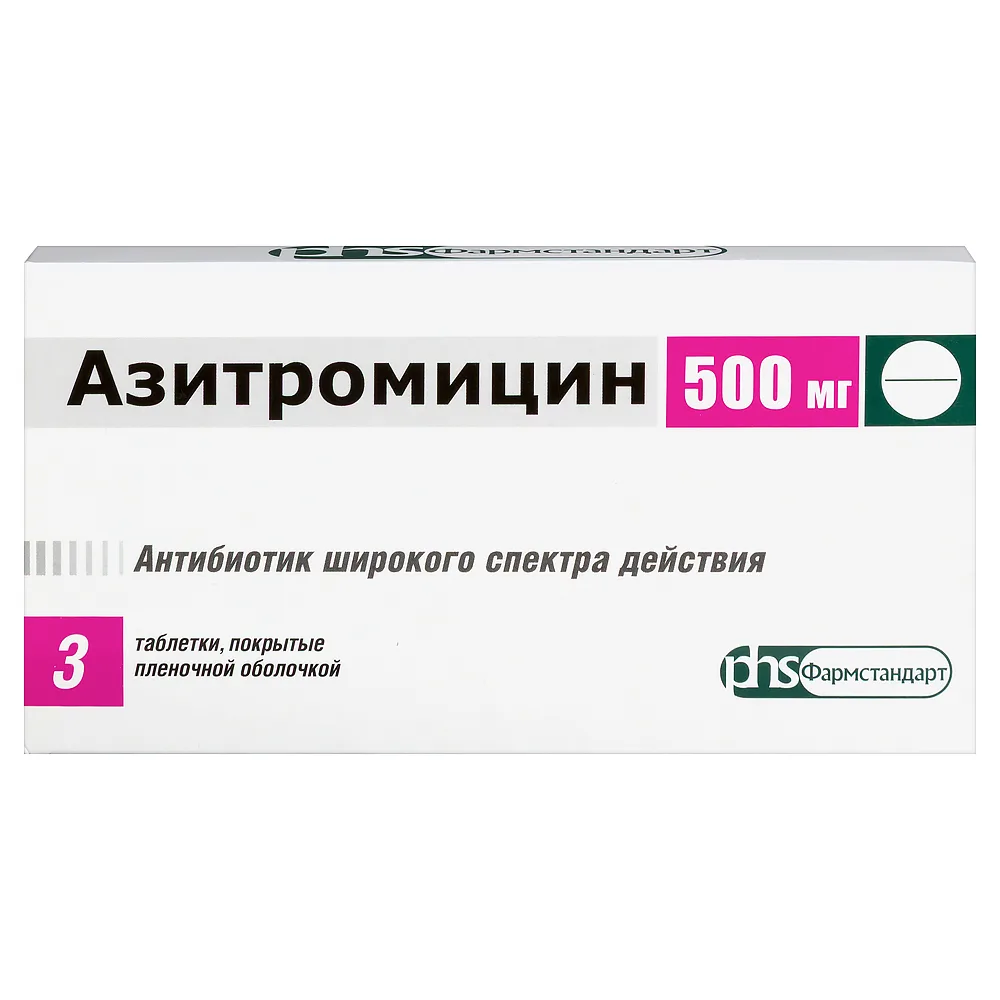
500 mg 3 tablets, film-coated
$9.63
Choose another
4 options
Tap any option to switch the active packaging — adding to cart applies to whatever is currently selected above.
Manufacturer leaflet
Facts from the printed manufacturer leaflet. Sections vary by drug — we only show what's actually in the box.
Infectious-inflammatory diseases caused by microorganisms sensitive to the drug:
• infections of the upper respiratory tract and ENT organs: pharyngitis, tonsillitis, sinusitis, otitis media;
• infections of the lower respiratory tract: acute bronchitis, exacerbation of chronic bronchitis, pneumonia, including that caused by atypical pathogens;
• infections of the skin and soft tissues: moderate acne, erysipelas, impetigo, secondarily infected dermatoses;
• early stage of Lyme disease (borreliosis) - migrating erythema (erythema migrans);
• urinary tract infections caused by Chlamydia trachomatis (urethritis, cervicitis).
Инфекционно-воспалительные заболевания, вызванные чувствительными к препарату микроорганизмами:
• инфекции верхних дыхательных путей и ЛОР-органов: фарингит, тонзиллит, синусит, средний отит;
• инфекции нижних дыхательных путей: острый бронхит, обострение хронического бронхита, пневмония, в т.ч. вызванная атипичными возбудителями;
• инфекции кожи и мягких тканей: угри обыкновенные средней степени тяжести, рожа, импетиго, вторично инфицированные дерматозы;
• начальная стадия болезни Лайма (боррелиоз) - мигрирующая эритема (erythema migrans);
• инфекции мочеполовых путей, вызванные Chlamydia trachomatis (уретрит, цервицит).
Method of Use and Dosage
Ekomed® is taken orally, without chewing, once a day, regardless of food intake.
For adults (including the elderly) and children over 12 years old with a body weight over 45 kg.
For infections of the upper and lower respiratory tracts, ENT organs, skin, and soft tissues: 0.5 g per day for 3 days (total course dose - 1.5 g).
For moderate acne: 0.5 g per day for 3 days, then 0.5 g once a week for 9 weeks. The first weekly tablet should be taken 7 days after taking the first daily tablet (8th day from the start of treatment), and the subsequent 8 weekly tablets should be taken at 7-day intervals. Total course dose 6.0 g.
For migrating erythema: once a day for 5 days, 1st day 1.0 g, then from the 2nd to the 5th day 0.5 g. Total course dose 3.0 g.
For urogenital infections caused by Chlamydia trachomatis (urethritis, cervicitis): 1.0 g as a single dose.
Prescription for patients with impaired kidney function.
For patients with moderate kidney function impairment (creatinine clearance > 40 ml/min), dose adjustment is not required.
Экомед® принимают внутрь, не разжевывая, 1 раз в сутки, независимо от приема пищи.
Взрослым (включая пожилых людей) и детям старше 12 лет с массой тела свыше 45 кг.
При инфекциях верхних и нижних дыхательных путей. ЛОР-органов. кожи и мягких тканей: по 0,5 г в сутки в течение 3 дней (курсовая доза - 1,5 г).
При угрях обыкновенных средней степени тяжести: по 0,5 г в сутки в течение 3-х дней, затем по 0,5 г один раз в неделю в течение 9 недель. Первую еженедельную таблетку следует принять через 7 дней после приема первой ежедневной таблетки (8-ой день от начала лечения), последующие 8 еженедельных таблеток - с интервалом в 7 дней. Курсовая доза 6,0 г.
При мигрирующей эритеме: 1 раз в сутки в течение 5 дней, 1-й день 1,0 г. затем со 2-го по 5-й день по 0,5 г. Курсовая доза 3,0 г.
При инфекциях мочеполовых путей, вызванных Chlamydia trachomatis (уретрит, цервицит): L0 г однократно.
Назначение пациентам с нарушениями функции почек.
Для пациентов с умеренными нарушениями функции почек (клиренс креатинина > 40 мл/мин) коррекция дозы не нужна.
Section: Composition
One tablet contains:
active ingredient: azithromycin dihydrate calculated as azithromycin 500 mg;
excipients: lactulose 600 mg, calcium phosphate dihydrate 119.6 mg, corn starch 48.0 mg, hypromellose 10.0 mg, sodium lauryl sulfate 2.4 mg, sodium croscarmellose 40.0 mg, magnesium stearate 12.0 mg, microcrystalline cellulose to obtain a tablet without a coating weighing 1400 mg; excipients of the coating: hypromellose 18.98 mg, titanium dioxide 10.4 mg, macrogol-4000 8.32 mg, talc 2.24 mg, dye tropaeolin - 0.06 mg, to obtain a coated tablet weighing 1440 mg.
Description of the dosage form
Tablets coated with a yellow film, capsule-shaped, biconvex. Two layers are visible in a cross-section. The inner layer is white or almost white.
Одна таблетка содержит:
активное вещество: азитромицина дигидрат в пересчете на азитромицин 500 мг;
вспомогательные вещества: лактулоза или 600 мг, кальция фосфата дигидрат 119,6 мг, крахмал кукурузный 48,0 мг, гипромеллоза 10,0 мг, натрия лаурилсульфат 2,4 мг, кроскармеллоза натрия 40,0 мг, магния стеарат12,0 мг), целлюлоза микрокристаллическая до получения таблетки без оболочки массой 1400 мг;вспомогательные вещества оболочки: гипромеллоза 18,98 мг, титана диоксид 10,4 мг, макрогол-4000 8,32 мг), тальк 2,24 мг, краситель тропеолин - 0,06 мг, до получения таблетки с оболочкой массой 1440 мг.
Таблетки, покрытые пленочной оболочкой желтого цвета, капсуловидные, двояковыпуклые. На поперечном разрезе видны два слоя. Внутренний слой белого или почти белого цвета.
• hypersensitivity to macrolide antibiotics;
• severe liver and/or kidney failure;
• children under 12 years of age with a body weight of less than 45 kg (for this dosage form);
• breastfeeding;
• simultaneous use with ergotamine and dihydroergotamine.
With caution:
• moderate liver and kidney function impairment;
• in cases of arrhythmias or predisposition to arrhythmias and prolonged QT interval;
• when used together with terfenadine, warfarin, digoxin.
Pregnancy and lactation:
Azithromycin during pregnancy is recommended to be prescribed only in cases where the expected benefit to the mother outweighs the potential risk to the fetus.
During treatment with azithromycin, breastfeeding is suspended.
Section: Special Instructions
In case of a missed dose of the antibiotic, the missed dose should be taken as soon as possible, and subsequent doses should be taken at 24-hour intervals.
After discontinuation of azithromycin therapy, hypersensitivity reactions in some patients may persist for an extended period and may require specific therapy under medical supervision.
Effect on the ability to drive vehicles and operate machinery:
Given the likelihood of side effects from the central nervous system, caution should be exercised when driving vehicles and operating machinery.
• гиперчувствительность к антибиотикам группы макролидов;
• тяжелая печеночная и/или почечная недостаточность;
• детский возраст до 12 лет с массой тела менее 45 кг (для данной лекарственной формы);
• грудное вскармливание;
• одновременный прием с эрготамином и дигидроэрготамином.
С осторожностью:
• умеренные нарушения функции печени и почек;
• при аритмиях или предрасположенности к аритмиям и удлинению интервала QT;
• при совместном применении терфенадина, варфарина, дигоксина.
Беременность и лактация:
Азитромицин при беременности рекомендуется назначать только в случаях, когда ожидаемая польза от его приема для матери превышает потенциальный риск для плода.
Во время лечения азитромицином грудное вскармливание приостанавливают.
В случае пропуска приема антибиотика, пропущенную дозу следует принять как можно раньше, последующие дозы принимать с интервалом в 24 ч.
После отмены терапии азитромицином реакции гиперчувствительности у некоторых пациентов могут сохраняться в течение продолжительного времени и могут потребовать специфической терапии под наблюдением врача.
Влияние на способность управлять трансп. ср. и механизмами:
Учитывая вероятность развития побочных эффектов со стороны центральной нервной системы, следует соблюдать осторожность при управлении транспортными средствами и работе с механизмами.
Section: Side Effects
From the digestive system: nausea, vomiting, diarrhea, abdominal pain, loose stools, flatulence, digestive disorders, anorexia, constipation, change in tongue color, pseudomembranous colitis, cholestatic jaundice, hepatitis, changes in laboratory indicators of liver function, liver failure, liver necrosis (possibly with fatal outcome).
Allergic reactions: itching, skin rashes, angioedema, urticaria, photosensitization, anaphylactic reaction (rarely with fatal outcome), erythema multiforme, Stevens-Johnson syndrome, toxic epidermal necrolysis.
From the cardiovascular system: feeling of palpitations, arrhythmia, ventricular tachycardia, prolonged QT interval, bidirectional ventricular tachycardia.
From the central nervous system: dizziness/vertigo, headache, seizures, drowsiness, paresthesia, asthenia, insomnia, hyperactivity, aggressiveness, anxiety, nervousness.
From the sensory organs: tinnitus, reversible hearing impairment up to deafness (with high doses taken for a long time), disturbance of taste and smell perception.
From the blood and lymphatic systems: thrombocytopenia, neutropenia, eosinophilia.
From the musculoskeletal system: arthralgia.
From the urogenital system: interstitial nephritis, acute renal failure.
Others: vaginitis, candidiasis.
Section: Overdose
Symptoms: temporary hearing loss, nausea, vomiting, diarrhea.
Treatment is symptomatic.
Interaction
Antacids do not affect the bioavailability of azithromycin but reduce the maximum concentration in the blood by 30%. Therefore, the drug should be taken at least one hour before or two hours after taking these medications and food.
When administered parenterally, azithromycin does not affect the concentration of cimetidine, efavirenz, fluconazole, indinavir, midazolam, triazolam, or co-trimoxazole in plasma when used together; however, the possibility of such interactions should not be excluded when prescribing azithromycin for oral use.
If co-administration with cyclosporine is necessary, it is recommended to monitor the level of cyclosporine in the blood.
When digoxin and azithromycin are taken together, it is necessary to monitor the concentration of digoxin in the blood, as many macrolides increase the absorption of digoxin in the intestine, thereby increasing its concentration in the plasma. If co-administration with warfarin is necessary, careful monitoring of prothrombin time is recommended.
Simultaneous use of terfenadine and macrolide antibiotics can cause arrhythmia and prolong the QT interval. Therefore, the aforementioned complications cannot be excluded when terfenadine and azithromycin are taken together. Since there is a possibility of CYP3A4 isoenzyme inhibition by azithromycin in parenteral form when used together with cyclosporine, terfenadine, ergot alkaloids, cisapride, pimozide, quinidine, astemizole, and other drugs whose metabolism involves this isoenzyme, the possibility of such interaction should be considered when prescribing azithromycin for oral use.
When azithromycin and zidovudine are taken together, azithromycin does not affect the pharmacokinetic parameters of zidovudine in plasma or its renal excretion and that of its glucuronidated metabolite. However, the concentration of the active metabolite - phosphorylated zidovudine in mononuclear cells of peripheral vessels increases. The clinical significance of this fact is unclear.
When macrolides are taken simultaneously with ergotamine and dihydroergotamine, their toxic effects may manifest.
Со стороны пищеварительной системы: тошнота, рвота, диарея, боли в животе, жидкий стул, метеоризм, расстройство пищеварения, анорексия, запор, изменение цвета языка, псевдомембранозный колит, холестатическая желтуха, гепатит, изменение лабораторных показателей функции печени, печеночная недостаточность, некроз печени (возможно со смертельным исходом).
Аллергические реакции: зуд, кожные высыпания, ангионевротический отек, крапивница, фотосенсибилизация, анафилактическая реакция (в редких случаях со смертельным исходом), многоформная эритема, синдром Стивенса-Джонсона, токсический эпидермальный некролиз.
Со стороны сердечно-сосудистой системы: ощущение сердцебиение, аритмия, желудочковая тахикардия, увеличение интервала QT, двунаправленная желудочковая тахикардия.
Со стороны центральной нервной системы: головокружение/вертиго, головная боль, судороги, сонливость, парестезия, астения, бессонница, гиперактивность, агрессивность, беспокойство, нервозность.
Со стороны органов чувств: шум в ушах, обратимое нарушение слуха вплоть до глухоты (при приеме высоких доз в течение длительного времени), нарушение восприятия вкуса и запаха.
Со стороны кровеносной и лимфатической систем: тромбоцитопения, нейтропения, эозинофилия.
Со стороны опорно-двигательного аппарата: артралгия.
Со стороны мочеполовой системы: интерстициальный нефрит, острая почечная недостаточность.
Прочие: вагинит, кандидоз.
Симптомы: временная потеря слуха, тошнота, рвота, диарея.
Лечение симптоматическое.
Антацидные средства не влияют на биодоступность азитромицина, но уменьшают максимальную концентрацию в крови на 30%, поэтому препарат следует принимать, по крайней мере, за один час до или через два часа после приема этих препаратов и еды.
При парентеральном применении азитромицин не влияет на концентрацию циметидина, эфавиренза, флуконазола, индинавира, мидазолама, триазолама, ко-тримоксазола в плазме при совместном применении, однако не следует исключать возможности таких взаимодействий при назначении азитромицина для приема внутрь.
При необходимости совместного применения с циклоспорином, рекомендуется контролировать содержание циклоспорина в крови.
При совместном приеме дигоксина и азитромицина необходимо контролировать концентрацию дигоксина в крови, т.к. многие макролиды повышают всасывание дигоксина в кишечнике, увеличивая тем самым его концентрацию в плазме крови. При необходимости совместного приема с варфарином рекомендуется проводить тщательный контроль протромбинового времени.
Одновременный прием терфенадина и антибиотиков класса макролидов вызывает аритмию и удлинение QT интервала. Исходя из этого, нельзя, исключить вышеуказанных осложнений при совместном приеме терфенадина и азитромицина. Поскольку существует возможность ингибирования изофермента CYP3A4 азитромицином в парентеральной форме при совместном применении с циклоспорином, терфенадином, алкалоидами спорыньи, цизапридом,; пимозидом, хинидином, астемизолом и другими препаратами, метаболизм которых происходит с участием этого изофермента, следует учитывать возможность такого взаимодействия при назначении азитромицина для приема внутрь.
При совместном приеме азитромицина и зидовудина, азитромицин не влияет на фармакокинетические параметры зидовудина в плазме крови или на выведение почками его и его глюкуронированного метаболита. Тем не менее, увеличивается концентрация активного метаболита - фосфорилированного зидовудина в моноядерных клетках периферических сосудов. Клиническое значение данного факта не ясно.
При одновременном приеме макролидов с эрготамином и дигидроэрготамином возможно проявление их токсического действия.
Pharmacodynamics
Antibacterial drug with a broad spectrum of action from the macrolide-azalide group, exhibits a bacteriostatic effect. By binding to the 50S ribosomal subunit, it inhibits peptidyl transferase during translation, suppresses protein synthesis, slows down the growth and reproduction of bacteria, and at high concentrations exerts a bactericidal effect. It acts on both extracellular and intracellular pathogens. Microorganisms may be initially resistant to the action of the antibiotic or may acquire resistance to it.
Sensitive:
aerobic gram-positive microorganisms: Staphylococcus aureus (methicillin-sensitive), Streptococcus pneumoniae (penicillin-sensitive), Streptococcus pyogenes;
aerobic gram-negative microorganisms:
Haemophilus influenzae, Haemophilus parainfluenzae, Legionella pneumophila, Moraxella catarrhalis, Pasteurella multocida, Neisseria gonorrhoeae;
anaerobic microorganisms:
Clostridium perfringens, Fusobacterium spp., Prevotella spp., Porphyromonas spp.;
others: Chlamydia trachomatis, Chlamydia pneumoniae, Chlamydia psittaci, Mycoplasma pneumoniae, Mycoplasma hominis, Borrelia burgdorferi.
Moderately sensitive or resistant: aerobic gram-positive microorganisms:
Streptococcus pneumoniae (moderately sensitive or resistant to penicillin).
Resistant:
aerobic gram-positive microorganisms: Enterococcus faecalis,
Staphylococci spp. (methicillin-resistant).
Anaerobes:
Bacteroides fragilis group.
Streptococcus pneumoniae, beta-hemolytic Streptococcus spp. group A, Enterococcus faecalis, and Staphylococcus aureus (including methicillin-sensitive strains), resistant to erythromycin and other macrolides, lincosamides, are also resistant to azithromycin.
Pharmacokinetics
After oral administration, azithromycin is well absorbed and rapidly distributed in the body. The bioavailability after a single dose of 0.5 g is 37% (the "first-pass" effect through the liver), the maximum concentration (Cmax) after oral administration of 0.5 g is 0.4 mg/L, and the time to reach maximum concentration (Tmax) is 2-3 hours. The concentration in tissues and cells is 10-50 times higher than in blood serum. The volume of distribution is 31.1 L/kg, and the binding to plasma proteins is inversely proportional to the concentration in the blood, ranging from 7-50%. Azithromycin is acid-stable and lipophilic. It easily passes through histohematological barriers and penetrates well into the respiratory tract, urogenital organs, and tissues, including the prostate gland, skin, and soft tissues. It is also transported to the site of infection by phagocytes, polymorphonuclear leukocytes, and macrophages, where it is released in the presence of bacteria. It penetrates cell membranes and creates high concentrations within them, which is particularly important for eradicating intracellular pathogens. In infection foci, the concentration is 24-34% higher than in healthy tissues and correlates with the severity of the inflammatory process. Effective concentrations are maintained for 5-7 days after the last dose. In the liver, it is demethylated, and the resulting metabolites are inactive. The metabolism of the drug involves the isoenzymes CYP3A4, CYP3A5, and CYP3A7, of which it is an inhibitor. The plasma clearance is 630 mL/min: the half-life after administration is between 8 and 24 hours, averaging 14-20 hours, and the half-life in the interval from 24 to 72 hours is 41 hours. More than 50% of the drug is excreted unchanged by the intestines, and 6% by the kidneys. Food intake significantly alters pharmacokinetics: Cmax increases (by 31%), while the area under the concentration-time curve (AUC) remains unchanged. In elderly men (65-85 years), pharmacokinetic parameters do not change, while in women, Cmax increases (by 30-50%).
Антибактериальный препарат широкого спектра действия из группы макролидов-азалидов, оказывает бактериостатическое действие. Связываясь с 50S субъединицей рибосом, угнетает пептидтранслоказу на стадии трансляции, подавляет синтез белка, замедляет рост и размножение бактерий, в высоких концентрациях оказывает бактерицидный эффект. Действует на вне- и внутриклеточно расположенных возбудителей. Микроорганизмы могут быть изначально устойчивыми к действию антибиотика или могут приобретать устойчивость к нему.
Чувствительны:
аэробные грамположительные микроорганизмы: Staphylococcus aureus (метициллинчувствительные), Streptococcus pneumoniae (пенициллинчувствительные), Streptococcus pyogenes;
аэробные грамотрицательные микроорганизмы:
Haemophilus influenzae,Haemophilus parainfluenzae,Legionella pneumophila,Moraxella catarrhalis,Pasteurella multocida,Neisseria gonorrhoeae;
анаэробные микроорганизмы:
Clostridium perfringens,Fusobacterium spp.,Prevotella spp.,Porphyromonas spp.;
прочие:Chlamydia trachomatis,Chlamydia pneumoniae,Chlamydia psittaci,Mycoplasma pneumoniae,Mycoplasma hominis,Borrelia burgdorferi.
Умеренно чувствительны или нечувствительны: аэробные грамположительные микроорганизмы:
Streptococcus pneumoniae (умеренно чувствительные или резистентные к пенициллину).
Устойчивы:
аэробные грамположительные микроорганизмы:Enterococcus faecalis,
Staphylococci зрр.(метициллинустойчивые).
Анаэробы:
группа Bacteroides fragilis.
Streptococcus pneumoniae, бета-гемолитические Streptococcus spp. группы A, Enterococcus faecalis и Staphylococcus aureus (включая метициллинчувствительные штаммы), резистентные к эритромицину и прочим макролидам, линкозамидам, устойчивы и к азитромицину.
После приема внутрь азитромицин хорошо всасывается и быстро распределяется в организме. Биодоступность после однократного приема 0.5 г - 37 % (эффект "первого прохождения" через печень), максимальная концентрация (Сmах) после перорального приема 0,5 г - 0.4 мг/л, время достижения максимальной концентрации (ТСmах) - 2-3 ч. Концентрация в тканях и клетках в 10-50 раз выше, чем в сыворотке крови. Объем распределения - 31,1 л/кг, связывание с белками плазмы обратно пропорционально концентрации в крови и оставляет 7-50 %. Азитромицин кислотоустойчив, липофилен. Легко проходит через гистогематические барьеры, хорошо проникает в дыхательные пути, мочеполовые органы и ткани, в т.ч. в предстательную железу, кожу и мягкие ткани. К месту инфекции транспортируется также фагоцитами, полиморфно-ядерными лейкоцитами и макрофагами, где высвобождается в присутствии бактерий. Проникает через мембраны клеток и создает в них высокие концентрации, что особенно важно для эрадикации внутриклеточно расположенных возбудителей.
В очагах инфекции концентрация на 24-34 % выше, чем в здоровых тканях и коррелирует с выраженностью воспалительного процесса. Сохраняется в эффективных концентрациях в течение 5-7 дней после приема последней дозы.
В печени деметилируется, образующиеся метаболиты не активны. В метаболизме препарата участвуют изоферменты CYP3A4, CYP3A5, CYP3A7, ингибитором которых он является. Плазменный клиренс - 630 мл/мин: период полувыведения между 8 и 24 ч после приема - 14-20 ч, период полувыведения в интервале от 24 до 72 ч - 41 ч. Более 50 % препарата выводится кишечником в неизмененном виде, 6 % - почками.
Прием пищи существенно изменяет фармакокинетику: Сmах увеличивается (на 31%), показатель площадь под кривой "концентрация-время" (AUC) не изменяется.
У пожилых мужчин (65-85 лет) фармакокинетические параметры не меняются, у женщин увеличивается Сmах (на 30-50 %).
RU name Азитромицин экомед 500 мг 3 шт. таблетки, покрытые пленочной оболочкой
How we fulfill
Three checkpoints between the pharmacy shelf and your door. You see every one.
01
No grey-market middlemen, no warehouses we can't audit. Retail purchase, on demand, against your order.
02
A photo of your actual parcel in its original retail packaging lands in your inbox before it ships. Like this →
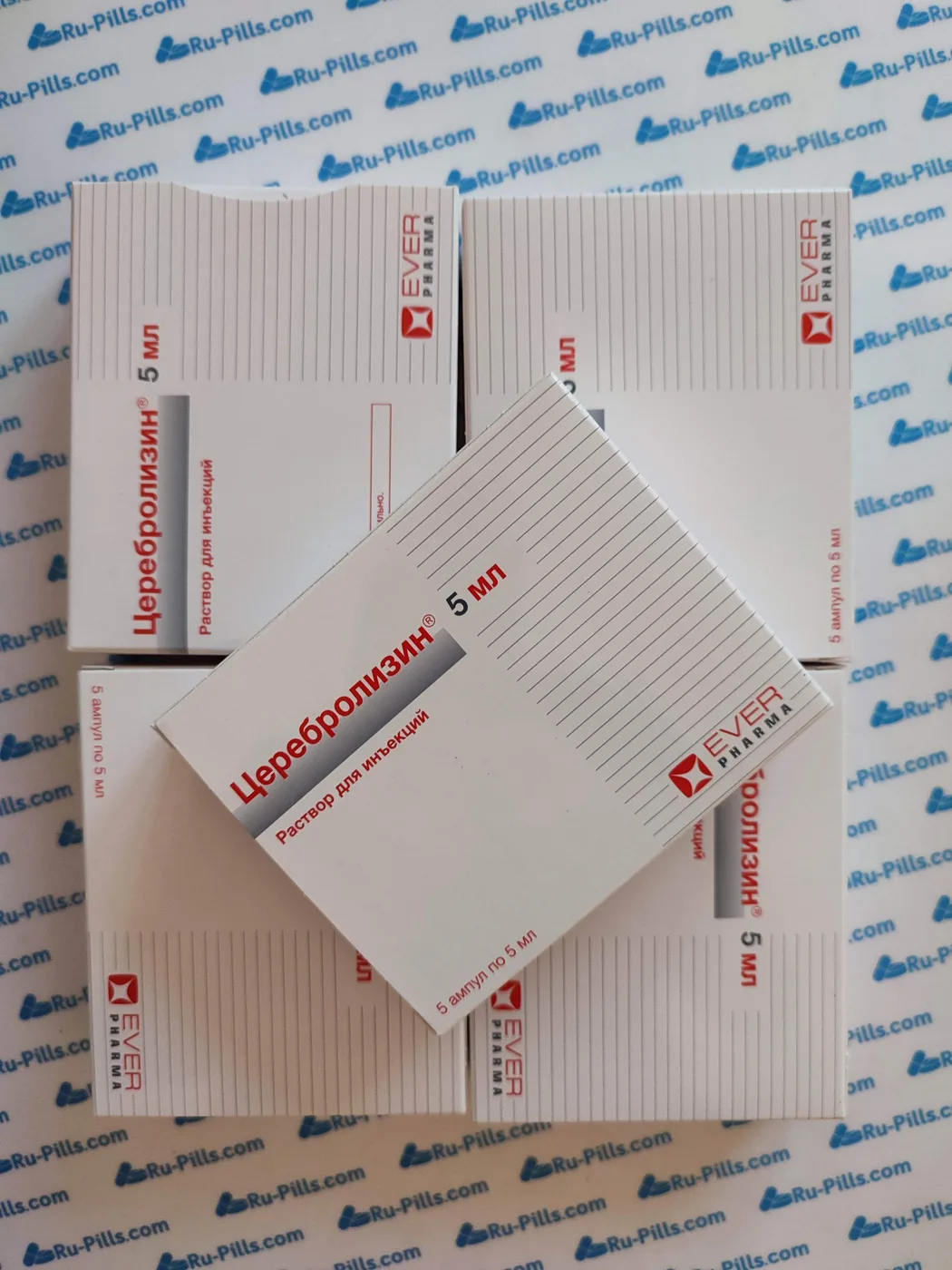 Real customer parcel
03
To 120+ countries. Most parcels arrive in 7–18 days.
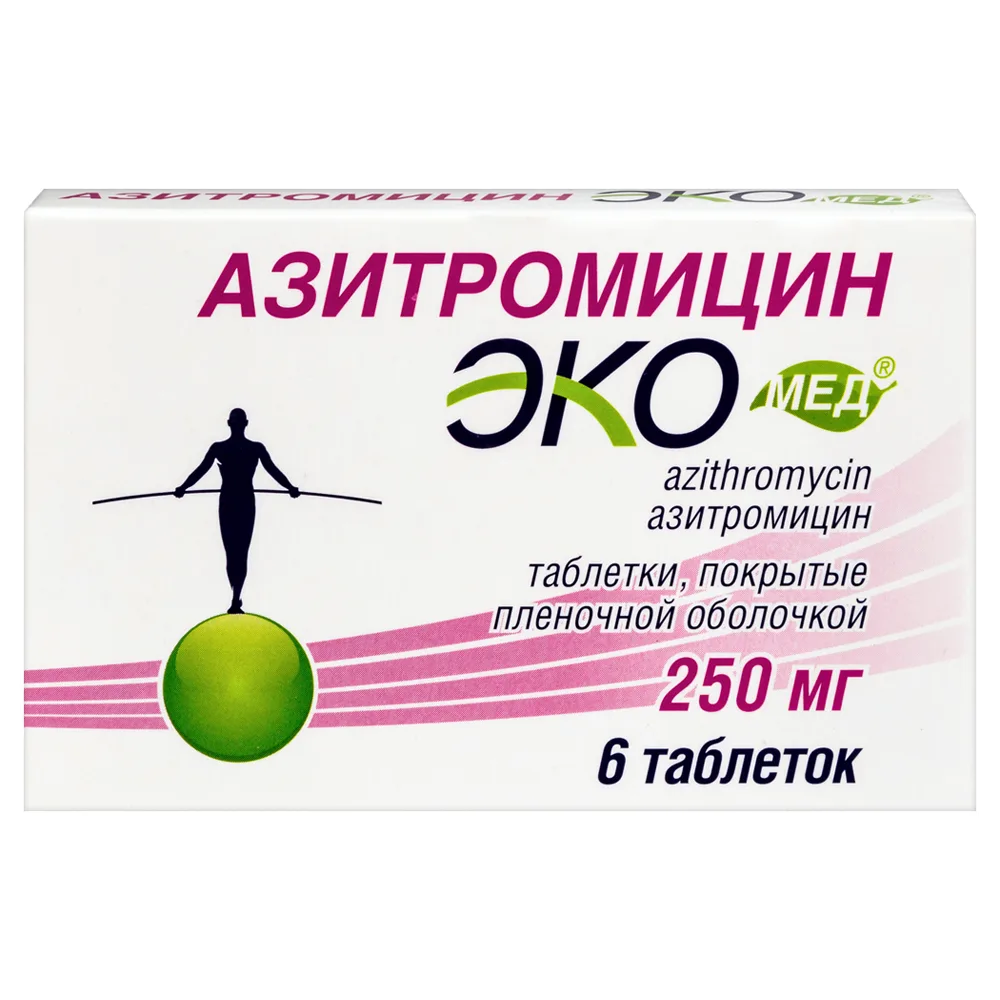
Azithromycin · tablets, film-coated

Clarithromycin · film-coated tablets
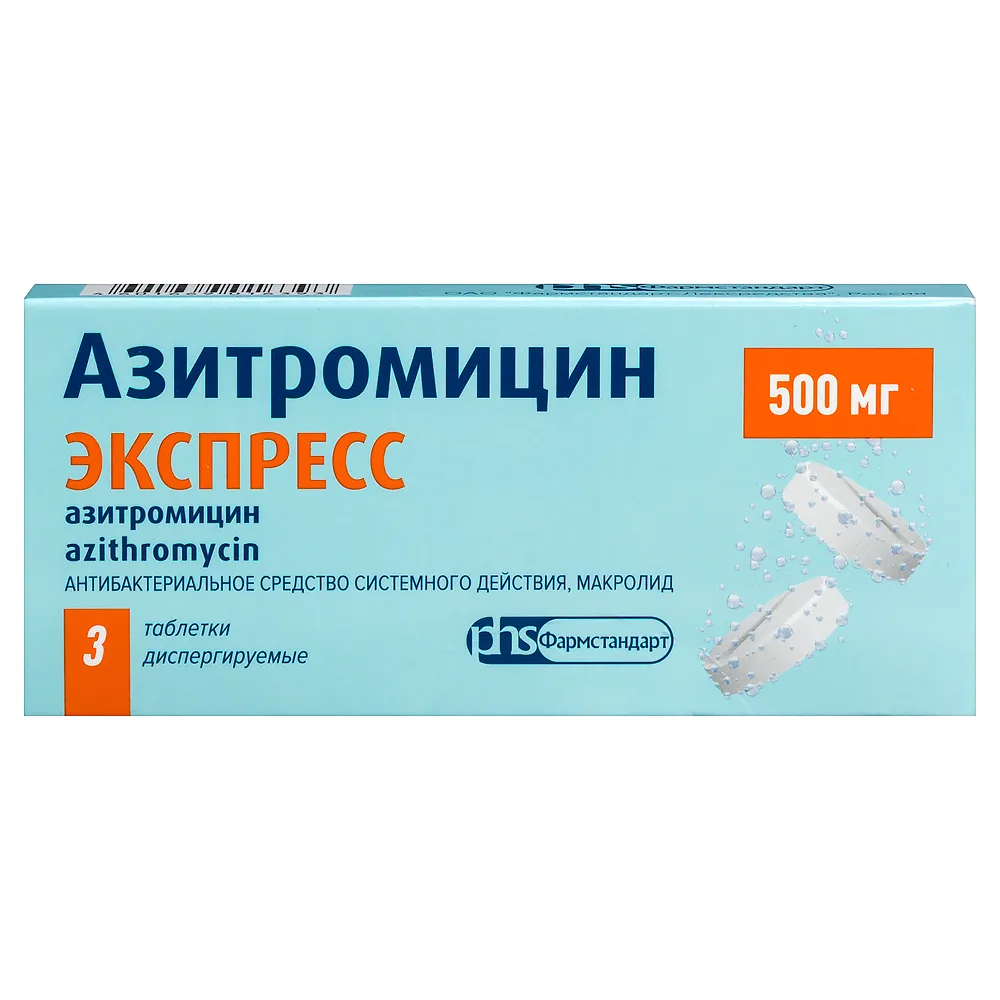
Azithromycin · dispersible tablets
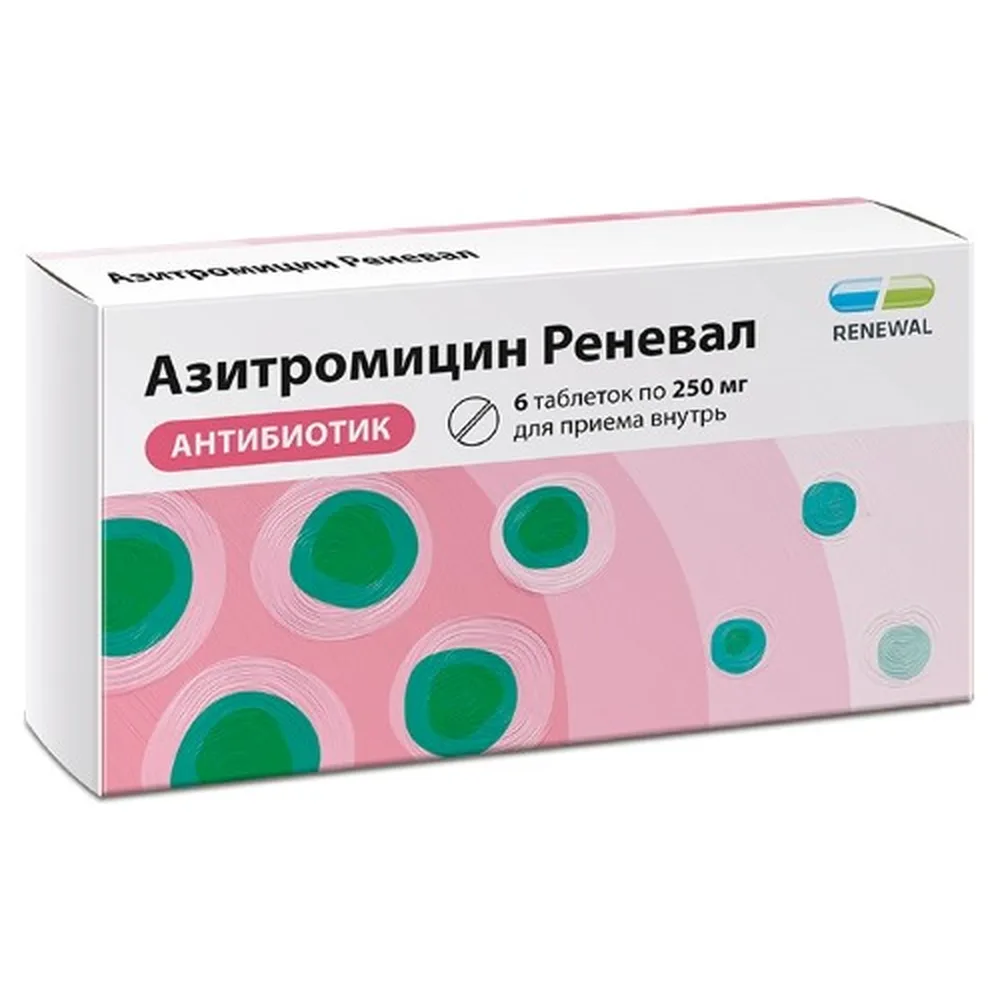
Azithromycin · film-coated tablets

Azithromycin · film-coated tablets